
Scientists found hidden synapse hotspots in the teen brain
The teen brain is quietly building powerful new neural hubs that may shape how we think for life.
- Date:
- January 16, 2026
- Source:
- Kyushu University
- Summary:
- Scientists have discovered that the adolescent brain does more than prune old connections. During the teen years, it actively builds dense new clusters of synapses in specific parts of neurons. These clusters emerge only in adolescence and may help shape higher-level thinking. When the process is disrupted, it could play a role in conditions like schizophrenia.
- Share:
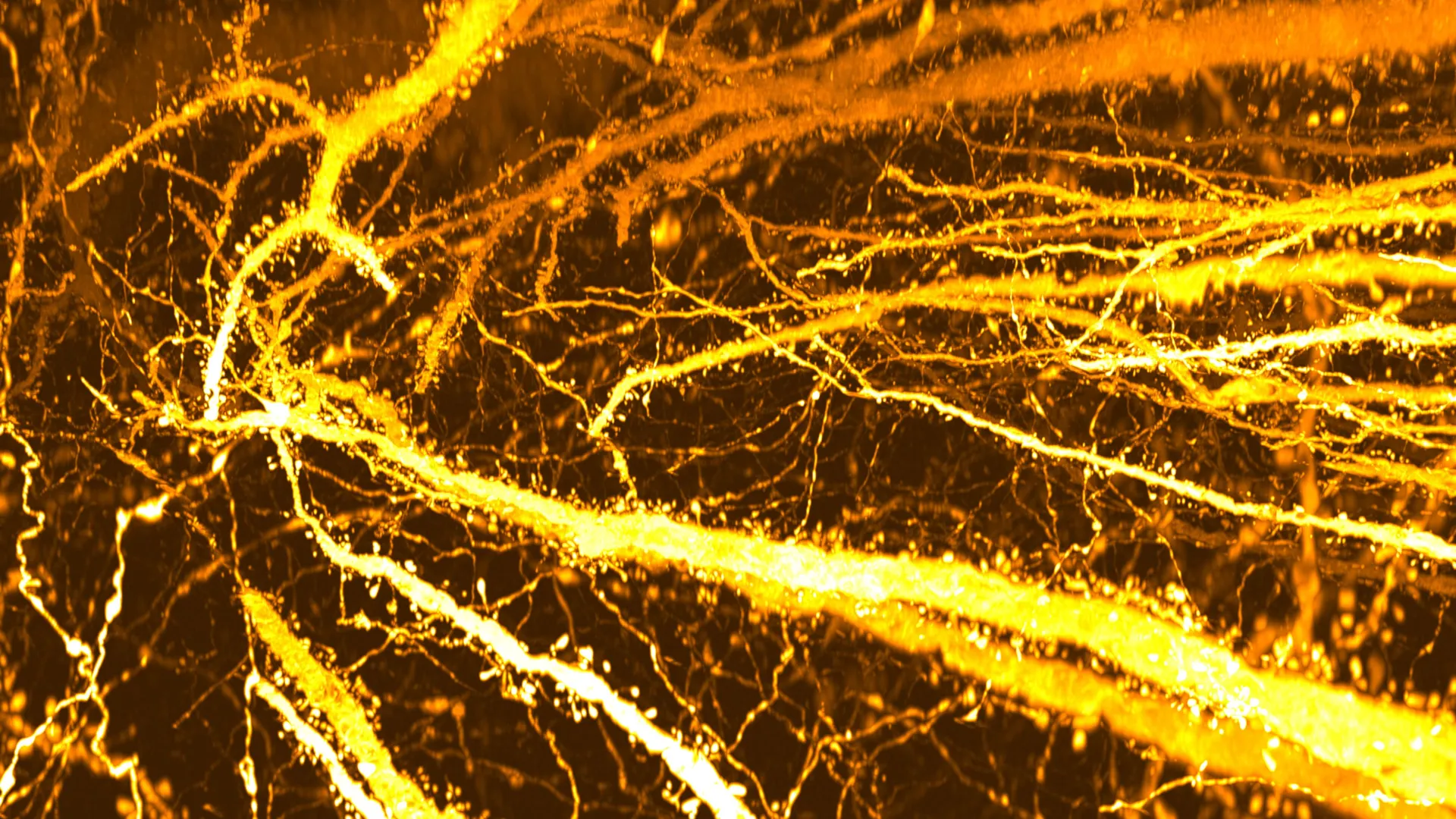
Adolescence is a defining stage not only for social and physical growth, but also for how the brain develops. During this time, advanced mental abilities such as planning, reasoning, and decision-making continue to mature. Even so, scientists still lack a complete understanding of how the brain's complex networks are shaped during this critical period.
At the heart of brain development are synapses -- the functional connections between neurons allow information to flow through the brain. For decades, researchers believed that synapse numbers steadily rise during childhood and then decline during adolescence. This idea led to the widely accepted theory that excessive "synaptic pruning," the process of removing weak or unused connections, could contribute to neuropsychiatric conditions. Schizophrenia, which can involve hallucinations, delusions, and disorganized thinking, has often been linked to this mechanism.
New Research Challenges a Long-Standing Theory
A team of scientists from Kyushu University has now uncovered evidence that questions this long-held view. In a study published in Science Advances on January 14, the researchers found that the adolescent brain does not simply eliminate connections. Instead, it also creates new, tightly packed clusters of synapses in specific parts of neurons during this stage of development.
"We did not set out to study brain disorders," says Professor Takeshi Imai at Kyushu University's Faculty of Medical Sciences. "After developing a high-resolution tool for synaptic analysis in 2016, we looked at the mouse cerebral cortex out of curiosity. Beyond seeing the beauty of the neuronal structure, we were surprised to discover a previously unknown high-density hotspot of dendritic spines, the tiny protrusions in dendrites where excitatory synapses are formed."
Zooming In on a Key Brain Layer
The cerebral cortex consists of six layers that work together to form highly intricate neural circuits. Imai and his colleagues focused on neurons in Layer 5, which collect information from many sources and send signals outward as the cortex's final output. Because of this role, these neurons act as a central control point for how the brain processes information.
To study these cells in detail, the team used SeeDB2 -- the tissue clearing agent Imai's team developed -- along with super-resolution microscopy. This combination allowed the researchers to examine transparent brain tissue and map dendritic spines across entire Layer 5 neurons for the first time.
A Synapse Hotspot That Appears in Adolescence
The detailed mapping revealed an unexpected pattern. One specific section of the dendrite contained an unusually dense concentration of dendritic spines, forming what the researchers call a "hotspot." Further analysis showed that this hotspot does not exist early in life and instead emerges during adolescence.
To pinpoint when this change occurs, the team tracked spine distribution across multiple stages of development. In two-week-old mice, before weaning, dendritic spines were spread relatively evenly across the neuron. Between three and eight weeks of age, a period that spans early childhood to adolescence, spine density increased sharply in a single region of the apical dendrite. Over time, this localized growth resulted in the formation of a dense synapse hotspot.
"These findings suggest that the well-established 'adolescent synaptic pruning' hypothesis needs to be reconsidered," says Imai.
Links to Schizophrenia and Brain Disorders
The discovery may also help explain how certain brain disorders develop. "While synaptic pruning occurs broadly across dendrites, synapse formation also takes place in specific dendritic compartments during adolescent cortical development. Disruption of this process may be the key factor in at least some types of schizophrenia," says Ryo Egashira, the study's first author and a graduate student at Kyushu University's Graduate School of Medical Sciences when the research was conducted.
To explore this idea, the researchers examined mice with mutations in genes associated with schizophrenia, including Setd1a, Hivep2, and Grin1. Early development appeared typical, with normal spine density up to two or three weeks after birth. During adolescence, however, synapse formation was significantly reduced, preventing the proper development of the hotspot.
For many years, schizophrenia has been viewed primarily as a condition caused by excessive synapse loss. These findings suggest a different possibility, that problems with building new synapses during adolescence may play a critical role. Still, the researchers emphasize that their study focused only on mice, and it remains uncertain whether the same processes occur in primates or humans.
Looking Ahead in Brain Development Research
"Moving forward, we hope to identify which brain regions are forming these new synaptic connections during adolescence," says Imai. "That will tell us what circuits are actually being built during this developmental window. Understanding how and when these connections form can advance our knowledge of both brain development and the mechanisms underlying neuropsychiatric disorders."
Story Source:
Materials provided by Kyushu University. Note: Content may be edited for style and length.
Journal Reference:
- Ryo Egashira, Meng-Tsen Ke, Nao Nakagawa-Tamagawa, Satoshi Fujimoto, Shigenori Inagaki, Tsuyoshi Takagi, Tsuyoshi Miyakawa, Yoshiaki Tagawa, Takeshi Imai. Dendritic compartment-specific spine formation in layer 5 neurons underlies cortical circuit maturation during adolescence. Science Advances, 2026; 12 (3) DOI: 10.1126/sciadv.adw8458
Cite This Page: