
Cancer cells depend on a dangerous DNA repair trick
Cancer cells may survive DNA chaos using a sloppy emergency repair—and that desperate fix could be their downfall.
- Date:
- December 27, 2025
- Source:
- Scripps Research Institute
- Summary:
- Researchers have discovered how cells activate a last-resort DNA repair system when severe damage strikes. When genetic tangles overwhelm normal repair pathways, cells flip on a fast but error-prone emergency fix that helps them survive. Some cancer cells rely heavily on this backup system, even though it makes their DNA more unstable. Blocking this process could expose a powerful new way to target tumors.
- Share:
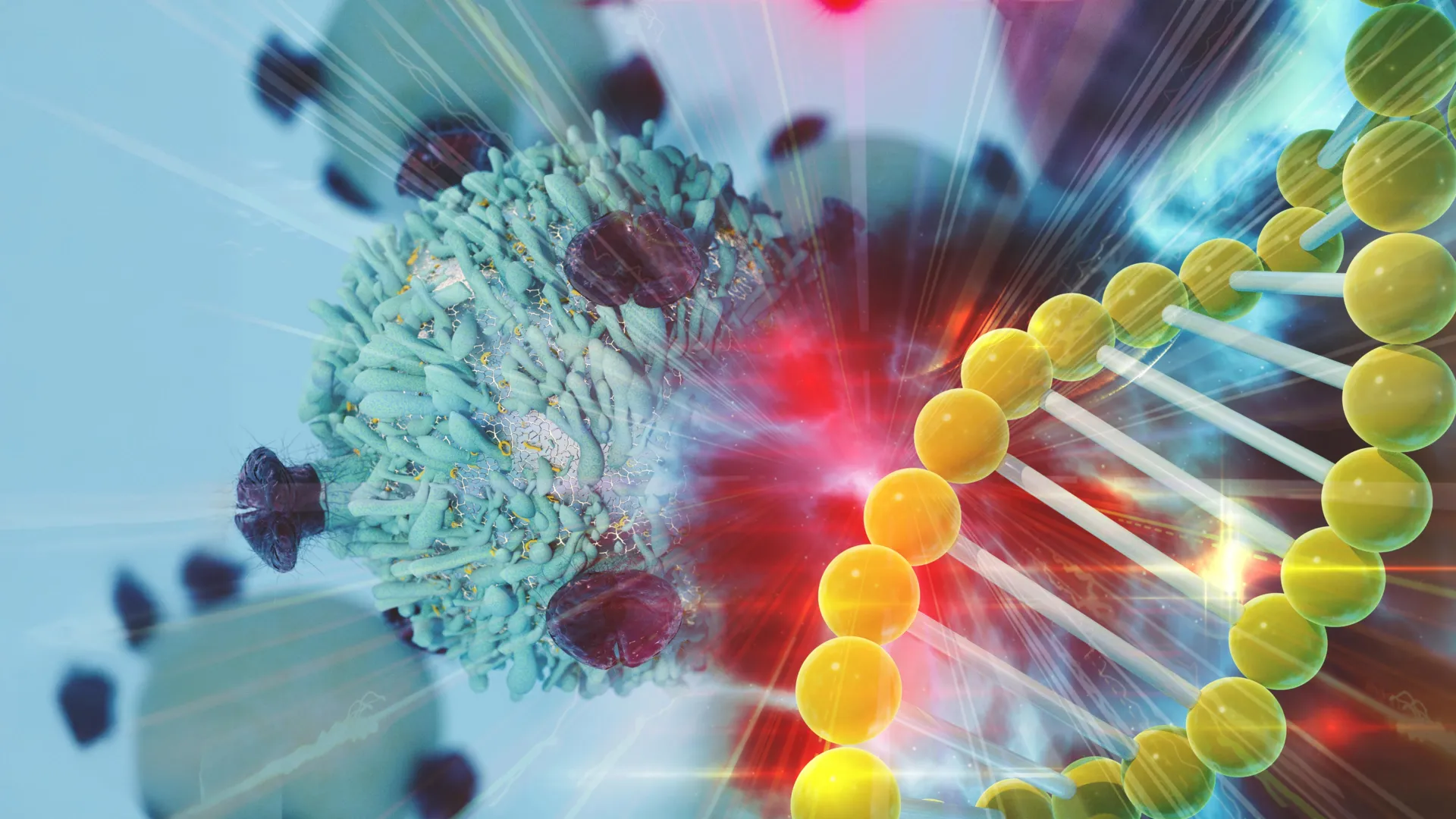
The DNA inside our cells is under constant attack. One of the most dangerous forms of damage is a double-strand break, which happens when both strands of the DNA helix are cut at the same time. Under normal conditions, healthy cells rely on highly accurate repair systems to fix this kind of damage. When those precise systems break down, however, cells may fall back on a less reliable emergency option. Researchers at Scripps Research have now identified when and how this backup repair process is triggered, and why some cancer cells depend on it to stay alive.
Their findings also suggest that this survival strategy could be turned against tumors that rely on it.
RNA DNA Tangles That Threaten Genome Stability
The study, published in Cell Reports, examined a protein involved in untangling twisted genetic material. This includes structures known as R-loops, which are RNA-DNA tangles that can disrupt normal DNA function. These structures form when newly produced RNA fails to separate from the DNA strand it was copied from, leaving one side of the DNA exposed and vulnerable.
"R-loops are important for many different cell functions, but they must be tightly controlled," says senior author Xiaohua Wu, a professor at Scripps Research. "If they aren't properly regulated, they can accumulate to harmful levels and cause genome instability."
The Role of SETX in Cancer and Neurological Disease
The researchers focused on a helicase protein, part of a group of molecular motors that unwind tangled genetic material, known as senataxin (SETX). Changes in the SETX gene are already linked to rare neurological disorders, including ataxia and a form of amyotrophic lateral sclerosis (ALS). The same mutations also appear in certain uterine, skin and breast cancers. This connection raised an important question. How do cancer cells cope with the stress caused by excessive R-loops when SETX is missing or defective?
A Cellular Crisis Triggers Emergency Repair
To find answers, Wu's team studied cells lacking SETX that showed unusually high levels of R-loops. They then observed what happened when double-strand breaks formed at these tangled sites. As expected, the cells accumulated significant DNA damage. What surprised the researchers was how aggressively the cells responded.
"We were surprised but excited to find that the cell turns on an emergency DNA repair mechanism called break-induced replication (BIR)," says Wu.
Break-Induced Replication as a Backup System
Under normal circumstances, BIR helps rescue stalled DNA replication forks. It can also act as a fallback repair option for double-strand breaks. Instead of making small, precise fixes, BIR copies long stretches of DNA to reconnect broken pieces. This rapid and extensive copying allows cells to survive severe damage, but it comes at a cost.
"It's like an emergency repair team that works intensively but makes more mistakes," says Wu.
The researchers discovered that without SETX, R-loops accumulate directly at sites of DNA breaks. This buildup interferes with the cell's usual repair signals. As a result, the broken DNA ends are trimmed excessively, exposing long sections of single-stranded DNA. These exposed regions attract the BIR machinery, including PIF1, a helicase that is essential for BIR to operate. Together, the exposed DNA and PIF1 act as a trigger that launches the BIR repair process.
A Survival Advantage That Creates a Weakness
Although BIR is prone to errors, it allows SETX-deficient cells to survive. Over time, however, these cells become dependent on BIR to repair DNA damage. If this repair route is blocked, the cells lose their ability to fix double-strand breaks and die. This type of vulnerability is known as synthetic lethality, a principle already used in several targeted cancer treatments.
Wu's team found that SETX-deficient cells are especially reliant on three BIR-related proteins: PIF1, RAD52 and XPF.
"What's important is that these aren't essential in normal cells, which means we could selectively kill SETX-deficient tumors," says Wu.
From Discovery to Potential Therapy
While the findings point to a promising strategy, Wu cautions that clinical applications will take time.
"We're now exploring ways to inhibit these BIR factors, trying to find ones with the right activity and low toxicity," she adds.
The team is also investigating which cancers accumulate the highest levels of R-loops and under what conditions. Identifying tumors most likely to respond to BIR-targeted therapies will be a key next step.
Although SETX deficiency itself is relatively rare, many cancers build up R-loops through other pathways, including oncogene activation or hormone signaling such as estrogen in certain breast cancers. This means the approach could be relevant to a much broader range of tumors, not only those with SETX mutations.
In addition to Wu, authors of the study "Break-induced replication is activated to repair R-loop-associated double-strand breaks in SETX-deficient cells" include Tong Wu, Youhang Li, Yuqin Zhao and Sameer Bikram Shah of Scripps Research; and Linda Z. Shi of the University of California San Diego.
This work was supported by the National Institutes of Health (grants GM141868, CA294646, CA244912 and CA187052).
Story Source:
Materials provided by Scripps Research Institute. Note: Content may be edited for style and length.
Journal Reference:
- Tong Wu, Youhang Li, Yuqin Zhao, Sameer Bikram Shah, Linda Z. Shi, Xiaohua Wu. Break-induced replication is activated to repair R-loop-associated double-strand breaks in SETX-deficient cells. Cell Reports, 2025; 44 (10): 116386 DOI: 10.1016/j.celrep.2025.116386
Cite This Page: