
Ancient sewers expose a hidden health crisis in Roman Britain
- Date:
- December 21, 2025
- Source:
- University of Cambridge
- Summary:
- Sediments from a Roman latrine at Vindolanda show soldiers were infected with multiple intestinal parasites, including roundworm, whipworm, and Giardia — the first time Giardia has been identified in Roman Britain. These parasites spread through contaminated food and water, causing diarrhea, weakness, and long-term illness. Even with sewers and communal toilets, infections passed easily between soldiers. The discovery highlights how harsh and unhealthy life could be on Rome’s northern frontier.
- Share:
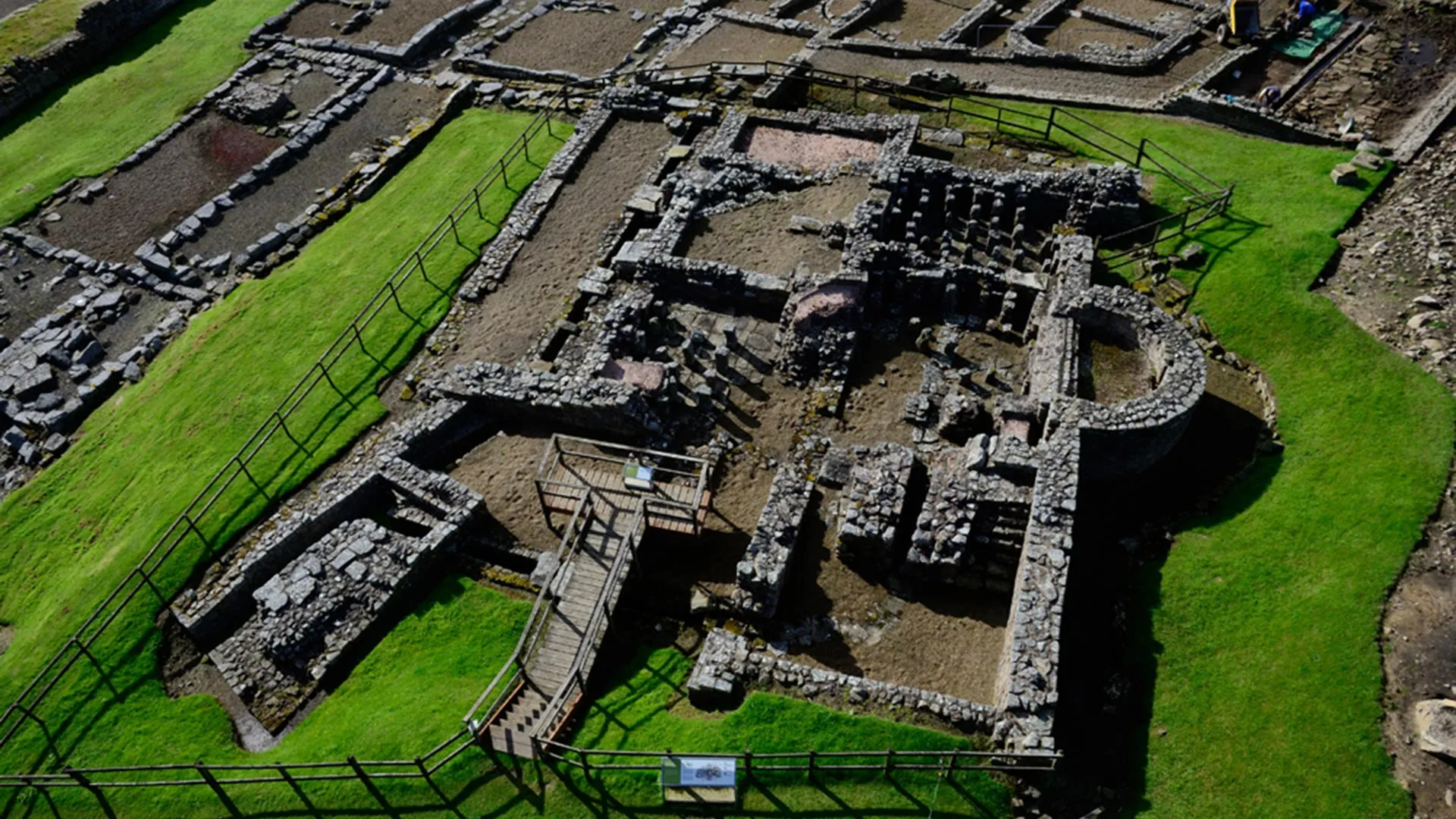
Scientists studying ancient sewer drains at the Roman fort of Vindolanda, located near Hadrian's Wall, have uncovered evidence that the people living there were infected with three different intestinal parasites: roundworm, whipworm, and Giardia duodenalis.
All three parasites spread through poor sanitation, typically when food, water, or hands are contaminated with human feces. Roundworms can grow to 20-30cm in length, while whipworms reach about 5cm. Giardia duodenalis is a microscopic protozoan parasite known for causing outbreaks of severe diarrhea. The discovery marks the first confirmed evidence of Giardia duodenalis in Roman Britain.
Vindolanda and the Roman Frontier in Britain
Vindolanda sat close to Hadrian's Wall in northern England. The wall was constructed by the Romans in the early 2nd century AD to protect the province of 'Britannia' from northern tribes and remained in use until the late 4th century. The fort itself lies between Carlisle and Corbridge in what is now Northumberland, Britain.
Stretching east to west from the North Sea to the Irish Sea, Hadrian's Wall featured a series of forts and towers placed at regular intervals. It was defended by a mix of infantry, archers, and cavalry drawn from across the Roman Empire.
A Site Known for Remarkable Preservation
Vindolanda is well known among archaeologists for its exceptional preservation of organic materials, thanks to the site's waterlogged soil. Discoveries include more than 1,000 thin wooden writing tablets that provide rare insight into everyday life at the fort, along with over 5,000 Roman leather shoes.
How Researchers Studied the Ancient Sewers
The parasite analysis focused on sediment taken from a sewer drain connected to the latrine block of a bath complex dating to the 3rd century CE. The research was carried out jointly by scientists from the universities of Cambridge and Oxford and published in the journal Parasitology.
Researchers collected 50 sediment samples from along the drain, which stretched roughly nine meters and carried waste from a communal latrine into a stream north of the fort. Along with the sediment, archaeologists recovered artifacts such as Roman beads, pottery fragments, and animal bones.
The samples were divided between laboratories at Cambridge and Oxford, where scientists examined them under microscopes to search for ancient helminth eggs, which are produced by parasitic worms that infect humans and animals.
Evidence of Worms and Giardia Infection
About 28% of the samples contained eggs from either roundworm or whipworm. One sample showed traces of both parasites. That same sample was further tested using a bio-molecular method called 'ELISA', a technique in which antibodies bind to proteins produced by single-celled organisms. This analysis revealed the presence of Giardia duodenalis.
The research team also examined a sample linked to an earlier fort from the 1st century CE. That fort was built around 85 CE and abandoned by 91/92 CE. The sediment came from a defensive ditch and also contained roundworm and whipworm eggs.
How Parasites Affected Roman Soldiers
"The three types of parasites we found could have led to malnutrition and cause diarrhea in some of the Roman soldiers," said Dr. Marissa Ledger, who led the Cambridge portion of the research as part of her PhD at the University of Cambridge's Department of Archaeology.
"While the Romans were aware of intestinal worms, there was little their doctors could do to clear infection by these parasites or help those experiencing diarrhea, meaning symptoms could persist and worsen. These chronic infections likely weakened soldiers, reducing fitness for duty. Helminths alone can cause nausea, cramping and diarrhea."
Study senior author Dr. Piers Mitchell, an Affiliated Scholar at Cambridge's McDonald Institute for Archaeological Research, explained that Giardia outbreaks could have been especially dangerous. "Some soldiers could have become severely ill from dehydration during summer outbreaks of Giardia, which are often linked to contaminated water and can infection dozens of people at a time. Untreated giardiasis can drag on for weeks, causing dramatic fatigue and weight loss."
Mitchell added that "The presence of the fecal-oral parasites we found suggests conditions were ripe for other intestinal pathogens such as Salmonella and Shigella, which could have triggered additional disease outbreaks."
How Vindolanda Compares to Other Roman Sites
According to the researchers, the dominance of fecal-oral parasites at Vindolanda mirrors findings from other Roman military sites, including Carnuntum in Austria, Valkenburg on Rhine in the Netherlands, and Bearsden in Scotland. In contrast, large urban centers like London and York show a wider range of parasites, including fish and meat tapeworms.
"Despite the fact that Vindolanda had communal latrines and a sewer system, this still did not protect the soldiers from infecting each other with these parasites," said Dr. Patrik Flammer, who analyzed samples at the University of Oxford.
What Ancient Parasites Reveal About the Past
"The study of ancient parasites helps us to know the pathogens that infected our ancestors, how they varied with lifestyle, and how they changed over time," said Prof Adrian Smith, who led the Oxford laboratory involved in the research.
Dr. Andrew Birley, CEO of the Vindolanda Charitable Trust and leader of ongoing excavations at the site, said the findings add to a growing picture of life on Rome's northern frontier. "Excavations at Vindolanda continue to find new evidence that helps us to understand the incredible hardships faced by those posted to this northwestern frontier of the Roman Empire nearly 2,000 years ago, challenging our preconceptions about what life was really like in a Roman frontier fort and town."
W. H. Auden once wrote of a miserable Roman soldier guarding a cold, rain-soaked wall in northern Europe, mentioning "lice in my tunic and a cold in my nose." Based on this new evidence, chronic stomach trouble could easily be added to that list.
Story Source:
Materials provided by University of Cambridge. Note: Content may be edited for style and length.
Journal Reference:
- Marissa L. Ledger, Patrik G. Flammer, Adrian L. Smith, Andrew Birley, Piers D. Mitchell. Parasite infections at the Roman fort of Vindolanda by Hadrian’s Wall, UK. Parasitology, 2025; 1 DOI: 10.1017/S0031182025101327
Cite This Page: