
These Bald Eagles fly the wrong way every year and stun scientists
- Date:
- December 11, 2025
- Source:
- Raptor Research Foundation
- Summary:
- Scientists tracking young Arizona Bald Eagles found that many migrate north during summer and fall, bucking the traditional southbound pattern of most birds. Their routes rely heavily on historic stopover lakes and rivers, and often extend deep into Canada. As the eagles mature, their flights become more precise, but they also encounter significant dangers like electrocution and poisoning. These discoveries point to the need for targeted conservation of critical travel corridors.
- Share:
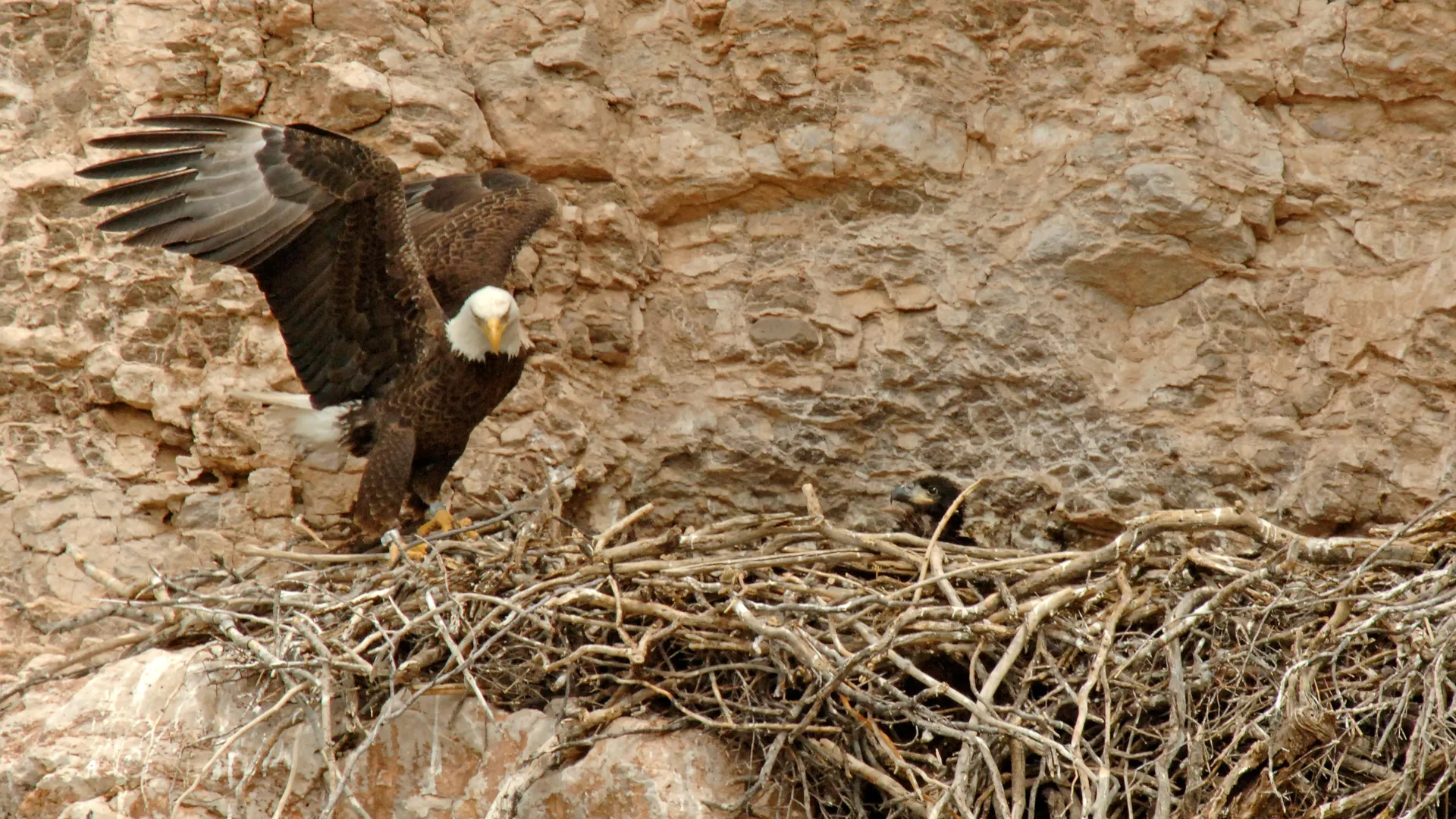
Birds of a feather do not always flock together, despite the adage. A new study in the Journal of Raptor Research describes how Bald Eagles (Haliaeetus leucocephalus) from Arizona are making unusual journeys by flying north instead of south, unlike most migratory birds in temperate regions. The paper, titled "Northward Migrations of Nonbreeding Bald Eagles from Arizona, USA," also reports on a single eagle that left Arizona and ultimately settled in California, a decision that challenges earlier ideas about how often these birds emigrate from their home population. The researchers conclude that southwestern Bald Eagles are highly exploratory, likely so they can locate short-lived food sources. As the climate and landscapes continue to change, research that documents how wildlife adjusts its movements is vital for designing conservation strategies and protecting key travel corridors for vulnerable species.
Between 2017 and 2023, the Arizona-based research team used satellite transmitters to follow 24 newly fledged Bald Eagles and two nonbreeding adults and to map how they moved within and beyond the state. Breeding Bald Eagles in Arizona are generally believed to stay close to their nesting territories for much of the year, but there has been much less information about what nonbreeding birds do. Because survival varies across life stages, comparing movement patterns and survival rates of nonbreeding eagles with those of breeders gives scientists a more complete view of how the species is doing across its range and how population level processes are shaped.
The researchers followed individual eagles for as long as the tracking devices continued to function, in some cases for up to four years during the seven-year study period. Many people, including scientists, are used to thinking of North American migratory birds as heading south during the nonbreeding season, which is typically our "winter," to find milder weather and more reliable food. Arizona Bald Eagles, however, start nesting in the winter, so their non-breeding season actually falls in the summer and autumn. Lead author Dr. Caroline D. Cappello was intrigued by this different timing of seasonal movement and notes that "northward migratory behavior raises interesting questions about the recent and historical pressures that shape these movement strategies."
Historic stopover sites and enduring eagle habitats
The authors report that the tracked eagles paused at many of the same lakes and rivers that a study in the 1980s had already identified as important stopover sites for Bald Eagles. This overlap supports the idea that these habitats have remained crucial gathering points for multiple generations of eagles.
Beyond confirming a strong use of the Intermountain Flyway and a dependence on lakes and rivers along their routes, the study showed that eagles of different ages migrated to the northern U.S. and southern Canada. Coauthor Dr. Javan M. Bauder, a USGS researcher, Assistant Unit Leader at the Arizona Cooperative Fish and Wildlife Research Unit and Assistant Professor at the University of Arizona, emphasizes the significance of this finding, stating that "managing and conserving wildlife populations requires that we understand the movement of patterns of individuals of all age classes within those populations." The team also observed that as eagles grew older, their migration pathways became more precise and refined. Most birds that were tracked for at least two years came back to Arizona in the fall of their hatch year after spending the summer roaming farther north. The researchers suggest that these young eagles could be taking advantage of seasonal food bonanzas such as spawning salmon, nesting waterfowl, or carcasses of large mammals. Determining whether this is true will require additional research.
Long journeys and lethal threats to young raptors
Bald Eagles, like many other raptors, must navigate a wide range of hazards in a human-dominated world. One eagle in the study crossed ten U.S. states and four Canadian provinces during her early life before appearing to settle in northern California, where she seemed poised to establish a breeding territory. At four years old, she was killed by electrocution, an all too common cause of death for large birds of prey. Her loss was especially troubling, Cappello explains, because it "underscored the ongoing risks these birds face," and because emigration is a difficult aspect of population dynamics to measure. Her apparent decision to live and breed in California would have provided rare insight into how often Bald Eagles hatched in Arizona disperse to other regions.
Other threats facing young raptors include poisoning from lead and rodenticides, collisions with wind turbines, loss of habitat, and uncertainty related to a changing climate. By studying raptors at every stage of life, including the exploratory journeys of young birds, scientists can make evidence-based recommendations about which stopover sites are most important to protect and which types of infrastructure, including electrical systems, could be modified to improve survival for eagles and other large raptors.
Future research and conservation priorities
The research team recommends future work on route fidelity, since, as Cappello notes, "if consistent patterns exist it could help focus conservation efforts on specific, high-use areas along their migratory route." They also highlight the importance of comparing these Arizona Bald Eagles to other wildlife populations that migrate north from the southern edge of their range, in order to better understand the tradeoffs, costs, and benefits of this northward migration strategy.
Story Source:
Materials provided by Raptor Research Foundation. Note: Content may be edited for style and length.
Journal Reference:
- Caroline D. Cappello, Kenneth V. Jacobson, James T. Driscoll, Kyle M. McCarty, Javan M. Bauder. Northward Migrations of Nonbreeding Bald Eagles from Arizona, USA. Journal of Raptor Research, 2025; 59 (3) DOI: 10.3356/jrr2450
Cite This Page: