
30,000-year-old DNA reveals Ice Age Europeans were far more connected than we thought
Europeans were traveling, mixing, and maintaining surprisingly far-reaching connections more than 30,000 years ago.
- Date:
- November 2, 2026
- Source:
- University of Vienna
- Summary:
- Scientists have uncovered surprising DNA evidence that Europeans living more than 30,000 years ago were connected across vast distances, challenging the idea that ancient populations remained largely isolated. Genetic clues from human remains and cave sediments reveal prehistoric migration, long-lasting communities, and survival through the harshest conditions of the Ice Age.
- Share:
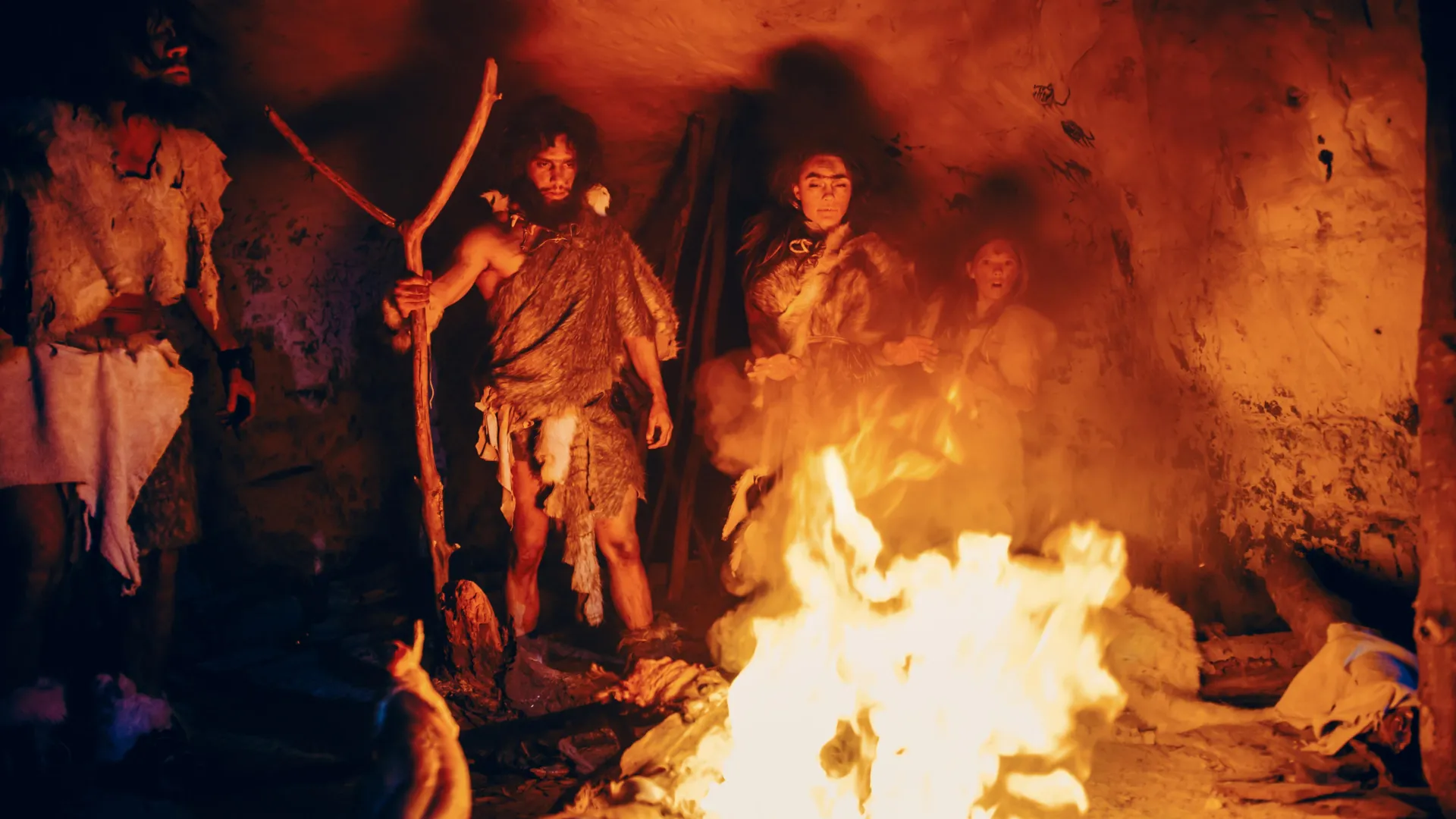
More than 30,000 years ago, people living across Ice Age Europe were far more connected than scientists previously believed. New genetic evidence reveals unexpected links between populations separated by enormous distances, challenging the long-held idea that eastern and western European groups remained largely isolated from one another.
An international research team led by the University of Vienna made the discovery by analyzing ancient DNA from rare human remains and traces of human genetic material preserved in cave sediments. Published in Science Advances, the findings provide a new picture of how prehistoric Europeans interacted, exchanged genes, and maintained populations through thousands of years of dramatic environmental change.
The research focuses on people associated with one of Europe's major Paleolithic cultures (the Gravettian), which flourished across the continent roughly 34,000 to 25,000 years ago. Archaeological discoveries have long suggested that these ancient populations maintained connections over considerable distances. However, previous genetic evidence pointed to relatively distinct eastern and western ancestry groups.
By combining new genetic findings with previously collected DNA, researchers uncovered evidence that these groups were more interconnected than expected. They also found signs that certain populations in southwestern Europe maintained their genetic ancestry for thousands of years.
A Woman From 30,000 Years Ago Reveals Hidden Genetic Connections
One of the most revealing discoveries came from the remains of a woman who lived approximately 30,000 years ago in what is now southwestern France. Found at Isturitz Cave, her remains provided the oldest genome-wide genetic dataset yet obtained from a modern human in southwestern Europe.
Her DNA contained a surprising combination of ancestry. Although most of her genetic background was associated with western European populations, she also carried ancestry linked to people from central and eastern Europe.
Using genetic modeling, researchers estimated that this mixing between populations occurred approximately 32,500 to 31,500 years ago. The finding suggests that genetic connections extended across large portions of Europe much earlier than scientists had previously established.
"Our results show that eastern and western European populations were not as genetically isolated as previously assumed," says first author Pere Gelabert, Department of Evolutionary Anthropology at the University of Vienna. "Gene flow across such large distances adds a new dimension to our understanding of how Gravettian populations were connected."
The researchers identified a similar genetic signature in another ancient individual whose remains had previously been studied at Ormesson, France. Combined with archaeological discoveries, the evidence strengthens the possibility that Isturitz Cave served as a gathering place where different groups of prehistoric people encountered one another.
Ancient DNA Hidden in Cave Sediments Reveals Ice Age Survival
While some ancient Europeans exchanged genes across considerable distances, other populations appear to have maintained a continuous genetic presence in particular regions for thousands of years.
Evidence from Chufín Cave in northern Spain suggests that ancestry associated with western European populations persisted in southwestern Europe over an extended period.
The researchers also used an increasingly valuable technique that allows scientists to recover human DNA directly from cave sediments, even when no identifiable human remains are present. Tiny traces of genetic material left behind by ancient inhabitants can survive in soil and other deposits for thousands of years, providing information about people whose bones have never been found.
At El Mirón Cave in Cantabria, Spain, the team recovered human nuclear DNA from a sediment layer dating back approximately 22,000 years. Despite finding no human bones or teeth in the layer, they obtained enough genetic information to determine the ancestry of the people who had occupied the site.
"Sedimentary DNA allows us to recover genetic information from periods where human remains are missing," says senior author Ron Pinhasi, Department of Evolutionary Anthropology at the University of Vienna, whose team led this study. "This gives us a way to connect archaeological layers with the genetic ancestry of the people who occupied a site."
The results indicate that western European ancestry persisted in the region through the Last Glacial Maximum, a period when enormous ice sheets reached their greatest extent during the last Ice Age.
This supports the idea that the Iberian Peninsula, which includes present-day Spain and Portugal, served as an important refuge for prehistoric humans during some of the coldest conditions of the Ice Age.
Ancient Mother and Son Offer Clues About Prehistoric Mating
Another revealing discovery came from southern Italy, where researchers examined the genetic remains of Ostuni1b, a male fetus believed to be the son of a previously studied woman known as Ostuni1.
Genetic analysis suggests that the child's father likely belonged to the same ancestral population as his mother. However, the parents were not closely related, offering evidence that mating patterns within these ancient communities may have helped limit inbreeding.
This finding adds another dimension to the emerging picture of prehistoric European societies. Even as some populations maintained relatively stable genetic ancestry within their home regions, they could also participate in broader networks of genetic exchange spanning considerable distances.
Together, the discoveries show that long-term regional continuity and widespread genetic connections were not mutually exclusive. Both helped shape the population history of Ice Age Europe.
Building on these results, Gelabert and his colleagues are now combining DNA recovered from ancient sediments with advanced proteomic techniques, which examine proteins for clues about past life. Their goal is to investigate the earliest expansions of modern humans across Europe, including how these populations interacted with carnivores in places where bones and other organic remains are scarce.
Story Source:
Materials provided by University of Vienna. Note: Content may be edited for style and length.
Journal Reference:
- Pere Gelabert, Susanna Sawyer, Vanessa Villalba-Mouco, Olivia Cheronet, Victoria Oberreiter, Diego Gárate, Christian Normand, Lawrence G. Straus, Manuel R. González Morales, Igor Gutiérrez-Zugasti, David Cuenca-Solana, Joëlle Darricau, Henry de Lumley, José-Miguel Tejero, Mareike Stahlschmidt, Thomas Higham, Maddalena Giannì, Laura G. van der Sluis, Carla Gómez-Montes, Miriam Ibáñez-Herranz, Michelle Hämmerle, Brina Zagorc, Florian Exler, Florian Brück, Stefan Franz, Fernanda Tenorio Cano, Kristin Stewardson, Lijun Qiu, Ana B. Marín-Arroyo, Michaela Lucci, Alessia Nava, Francesco Genchi, Donato Coppola, Chiara La Marca, Alfredo Coppa, David Reich, Ron Pinhasi. Early Gravettian genomic data from Western Europe reveal population movements before the LGM. Science Advances, 2026; 12 (43) DOI: 10.1126/sciadv.aeh6128
Cite This Page: