
Scientists discover a bizarre “devil flower” hidden in Thailand
- Date:
- September 3, 2026
- Source:
- Pensoft Publishers
- Summary:
- Scientists have discovered a strange black “devil flower” in Thailand that lives mostly underground, steals nutrients from fungi, and looks strikingly unlike a typical plant. The newly named Thismia daemona is known from fewer than 50 individuals and may already be critically endangered.
- Share:
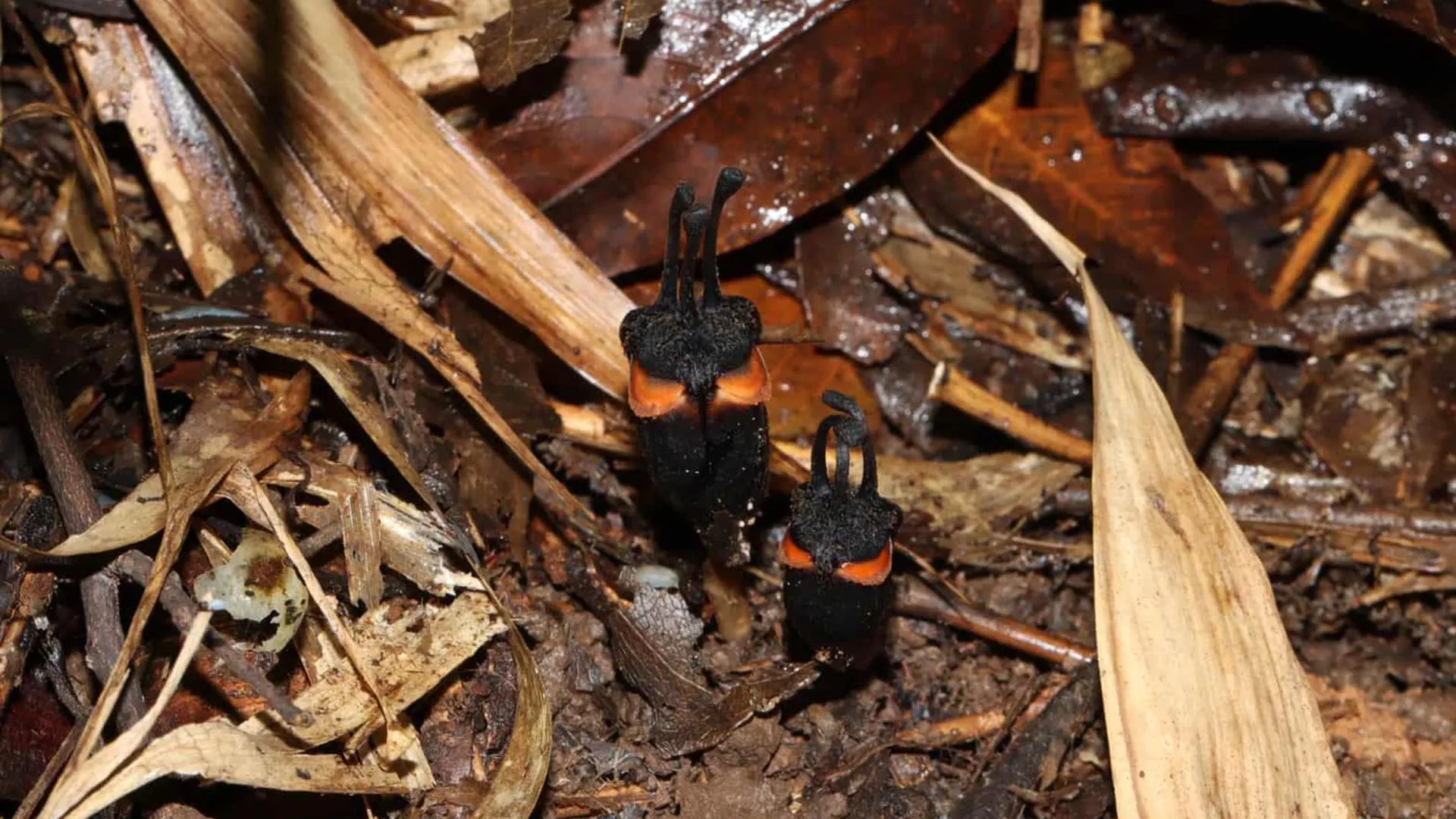
Scientists have identified a remarkable new species of leafless flowering plant growing on the forest floor of a national park in western Thailand. Its unusual, almost supernatural appearance inspired its name: Thismia daemona, the "devil flower."
The plant belongs to Thismia, a genus of tiny species sometimes known as "fairy lanterns." These plants lack chlorophyll and do not carry out photosynthesis. Instead, they obtain nutrients through underground fungi and remain concealed beneath layers of leaf litter for nearly their entire lives.
A Surprising Discovery in Thailand
Botanists from Chulalongkorn University and Prince of Songkla University discovered the new species while surveying Thong Pha Phum National Park. The plant was growing at an elevation of nearly 1,000 meters, an unusually high and seasonally dry environment for members of the genus.
"Finding Thismia daemona in Thong Pha Phum National Park was indeed a major surprise," said Dr. Sahut Chantanaorrapint of Prince of Songkla University. "Typically, Thismia species are known to occur in perennially humid lowland rainforests. However, this population was discovered in a seasonal, montane evergreen forest at an elevation of nearly 1,000 meters above sea level."
The discovery also changes scientists' understanding of the geographic range of this plant group. Thismia daemona belongs to Thismia section Geomitra, which had previously been documented only in Peninsular Malaysia, Borneo and Sumatra. Finding it in Thailand extends the known distribution of the entire section farther north for the first time.
Why It Is Called the "Devil Flower"
The plant's striking appearance helps explain its dramatic name. Its flower is mostly black and topped with horn-like appendages that rise from a dome-shaped "miter." Bright reddish-orange patches near the base resemble glowing eyes, adding to its demon-like appearance.
"Combined with its hidden, subterranean, and mysterious lifestyle on the forest floor, our team unanimously agreed that naming it Thismia daemona perfectly captured its enigmatic and devil-like essence," Dr. Chantanaorrapint said.
Fewer Than 50 Plants Are Known
Although the new species is visually striking, its survival may be at risk. Scientists know of only one population, consisting of fewer than 50 individuals in an area smaller than a football pitch. The species has therefore been provisionally assessed as Critically Endangered. One concern is that its habitat lies inside a national park that receives substantial tourist traffic.
Dr. Chantanaorrapint believes involving nearby communities will be important for protecting the plant and its fragile habitat.
"A key next step is adopting a sustainable conservation approach aligned with the UNESCO Man and the Biosphere concept, harmonizing biodiversity conservation with human engagement. Inspiring local people to take pride in their natural heritage not only safeguards the microhabitat, but also supports sustainable, community-led ecotourism."
The research was published in the open-access journal PhytoKeys. With the addition of Thismia daemona, Thailand is now known to be home to sixteen species of Thismia.
Story Source:
Materials provided by Pensoft Publishers. Note: Content may be edited for style and length.
Journal Reference:
- Tosak Seelanan, Isareyakorn Chantapram, Neeranuch Taosiri, Chanachon Chuchuea, Sahut Chantanaorrapint. Thismia daemona (Thismiaceae), a new species from Thailand supported by morphological and molecular evidence. PhytoKeys, 2026; 278: 177 DOI: 10.3897/phytokeys.278.202868
Cite This Page: