
NASA brings Crew-11 home early in rare medical evacuation
After five months in space, Crew-11 came home early in a safe Pacific splashdown.
- Date:
- January 16, 2026
- Source:
- NASA
- Summary:
- SpaceX Crew-11 splashed down safely in the Pacific after more than five months in orbit aboard the International Space Station. The four astronauts completed over 140 experiments and traveled nearly 71 million miles around Earth. NASA brought the crew home earlier than planned due to a medical concern, with officials confirming the affected crew member is stable. The mission underscores how quickly today’s space programs can adapt while keeping astronauts safe.
- Share:
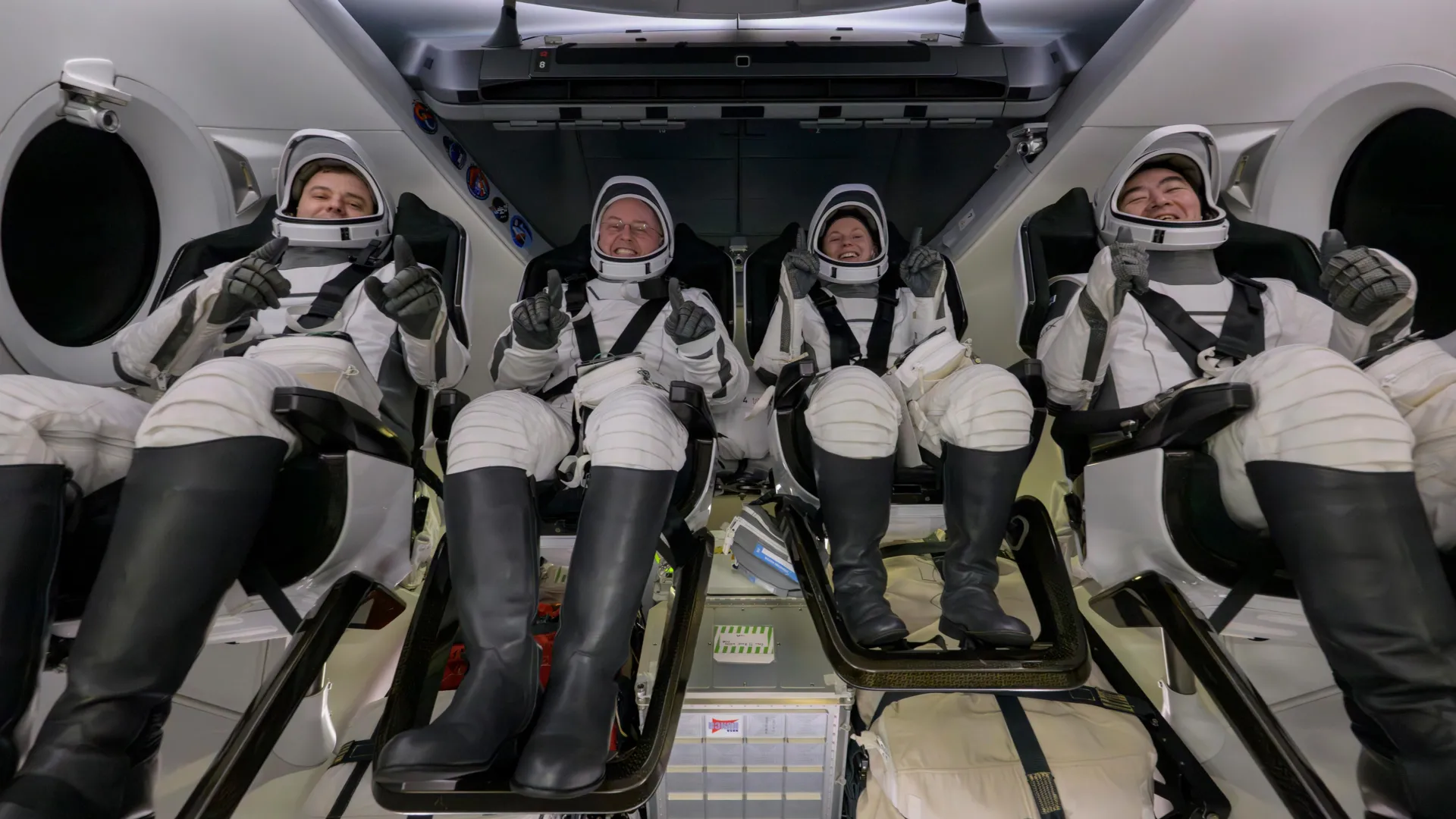
NASA's SpaceX Crew-11 mission has successfully concluded with a safe splashdown in the Pacific Ocean early Thursday morning, just off the coast of San Diego. The landing brought to a close a mission that lasted more than five months aboard the International Space Station.
The returning crew included NASA astronauts Zena Cardman and Mike Fincke, JAXA (Japan Aerospace Exploration Agency) astronaut Kimiya Yui, and Roscosmos cosmonaut Oleg Platonov. Their SpaceX Dragon capsule touched down at 12:41 a.m. PST, after which recovery teams aboard SpaceX vessels quickly secured the spacecraft and assisted the astronauts.
Science Success and International Collaboration
"I couldn't be prouder of our astronauts and the teams on the ground at NASA, SpaceX, and across our international partnerships," said NASA Administrator Jared Isaacman. "Their professionalism and focus kept the mission on track, even with an adjusted timeline. Crew-11 completed more than 140 science experiments that advance human exploration. Missions like Crew-11 demonstrate the capability inherent in America's space program -- our ability to bring astronauts home as needed, launch new crews quickly, and continue pushing forward on human spaceflight as we prepare for our historic Artemis II mission, from low Earth orbit to the Moon and ultimately Mars."
Over the course of the mission, the crew devoted hundreds of hours to scientific research, station maintenance, and testing new technologies. They also marked a historic milestone on Nov. 2, 2025, celebrating 25 years of uninterrupted human presence aboard the orbiting laboratory. Research conducted on the space station continues to expand scientific understanding while supporting future missions beyond Earth orbit.
Early Return Due to Medical Concern
Crew-11 returned to Earth about one month earlier than planned after teams identified a medical concern involving one crew member. NASA confirmed the individual remains stable but did not release further details to protect medical privacy.
Ahead of the return, NASA arranged for all four astronauts to be transported to a local hospital following splashdown. This allowed the crew to receive additional medical evaluation using Earth-based resources. After a planned overnight stay, the astronauts will travel to NASA's Johnson Space Center in Houston, where they will begin standard postflight evaluations and physical reconditioning.
Mission Timeline and Time in Orbit
The Crew-11 mission began on Aug.1, 2025, with a launch at 11:43 a.m. EDT from Launch Complex 39A at NASA's Kennedy Space Center in Florida. Approximately 15 hours later, the SpaceX Dragon spacecraft docked with the International Space Station at 1:27 a.m. CDT on Aug. 2.
During their 167 days in space, the crew completed more than 2,670 orbits of Earth and traveled nearly 71 million miles. The mission marked the fourth spaceflight for Mike Fincke and the second for Kimiya Yui, while Zena Cardman and Oleg Platonov flew their first missions. Fincke has now accumulated 549 total days in space, placing him fourth among NASA astronauts for cumulative time spent in orbit.
Commercial Crew Program and Future Missions
NASA's Commercial Crew Program continues to provide consistent access to space by partnering with private U.S. companies, including SpaceX. These collaborations allow astronauts to travel to and from the International Space Station while maximizing the station's role as a hub for research and technology development.
The successful return of Crew-11 highlights the program's ability to support complex missions, respond to unexpected challenges, and keep human spaceflight moving forward as NASA prepares for future exploration of the Moon and Mars.
Cite This Page: