
11,000-year-old dog skulls reveal a hidden origin story
- Date:
- January 6, 2026
- Source:
- University of Exeter
- Summary:
- Dogs began diversifying thousands of years earlier than previously believed, with clear differences in size and shape appearing over 11,000 years ago. A massive global analysis of ancient skulls shows that early dogs were already adapting to different roles in human societies. This challenges the idea that dog diversity is mainly a product of recent breeding. Instead, it points to a long process of coevolution between humans and their earliest canine companions.
- Share:
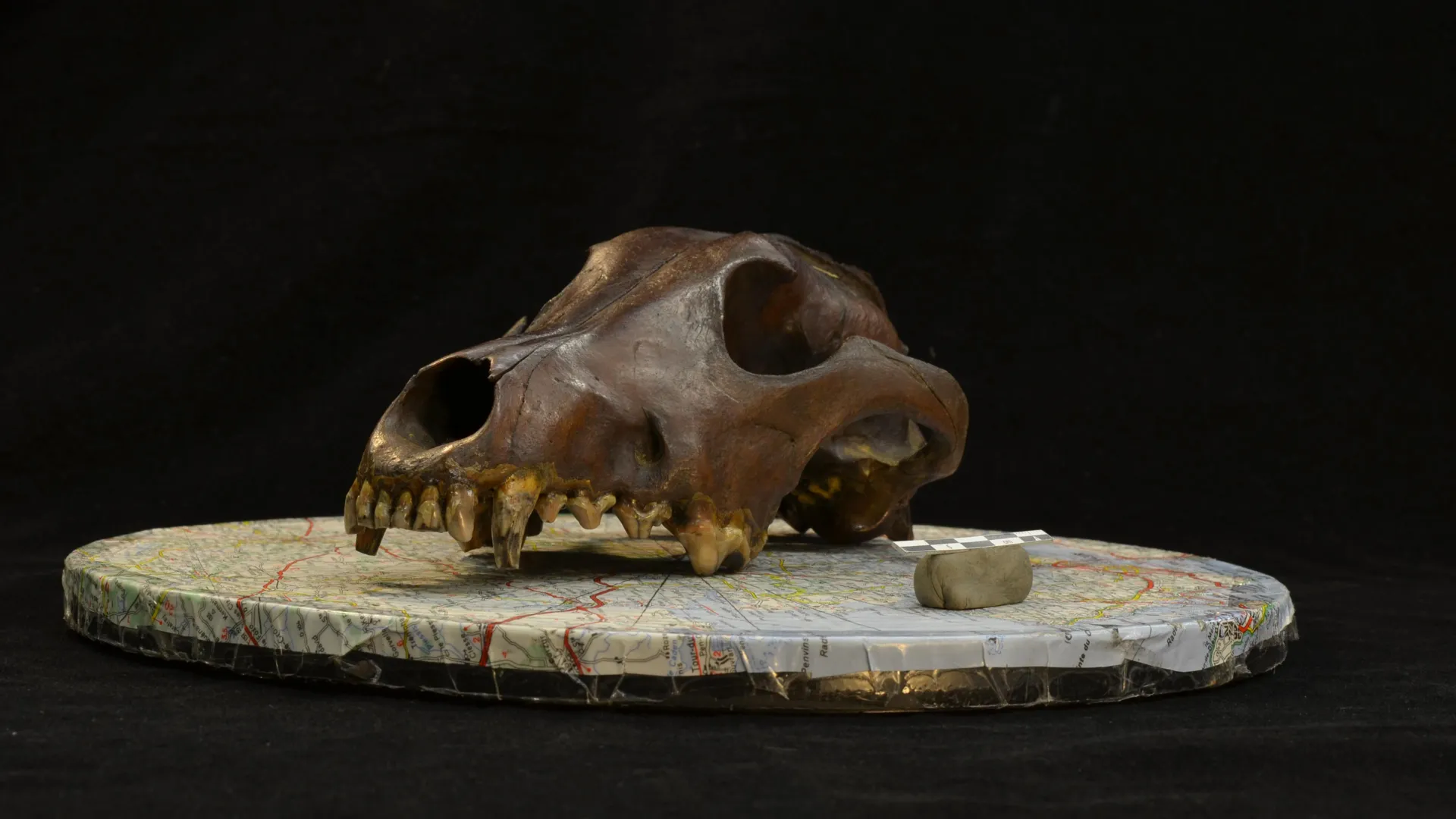
New archaeological research is reshaping our understanding of when domestic dogs first developed the wide range of shapes and sizes seen today. The study shows that dogs began to vary in form far earlier than scientists once believed, with clear signs of diversity appearing at least 11,000 years ago.
Using advanced shape analysis on hundreds of ancient remains collected across tens of thousands of years, researchers were able to track how early dogs changed over time. Their findings pinpoint a deep prehistoric moment when dogs started to differ noticeably in both size and skull shape.
Dog Diversity Predates Modern Breeding by Millennia
For decades, many scientists assumed that most dog diversity resulted from recent selective breeding practices that emerged with Victorian Kennel Clubs. This new work challenges that idea. Instead, it reveals that dogs were already showing substantial physical variation thousands of years ago, not long after they split from wolves.
The results suggest that early dogs were adapting quickly, long before the appearance of modern breeds, driven by their close and growing relationship with human communities.
A Global Study Spanning 50,000 Years
Published in Science and led by researchers at the University of Exeter and the French CNRS, the project is the most wide-ranging analysis of dog skulls ever conducted. The study began in 2014 and examined 643 canid skulls from both modern and archaeological sources, including recognized breeds, street dogs, and wolves. Together, these specimens span roughly 50,000 years, from the Pleistocene to the present.
Scientists from more than 40 institutions worked together to create detailed 3D models of each skull. They analyzed these models using geometric morphometrics, a method that allows precise comparisons of size and shape.
Early Dogs Took on Many Roles and Forms
The analysis revealed that by the Mesolithic and Neolithic periods, dogs already displayed a broad range of skull shapes and body sizes. This growing diversity likely reflected the many roles dogs played in early human societies, including hunting, herding, guarding, and companionship.
"These results highlight the deep history of our relationship with dogs," said co-lead author Dr. Carly Ameen of Exeter's Department of Archaeology and History. "Diversity among dogs isn't just a product of Victorian breeders, but instead a legacy of thousands of years of coevolution with human societies."
The Earliest Known Domestic Dogs
The oldest confirmed domestic dog in the study came from the Russian Mesolithic site of Veretye (dating to ~11,000 years ago). Researchers also identified early domestic dogs in America (~8,500 years ago) and Asia (~7,500 years ago), based on skull shapes associated with domestication. After these early appearances, variation among dogs increased rapidly.
Dr. Allowen Evin, co-lead author from the CNRS based at the Institut of Evolutionary Science-Montpellier, France, explained: "A reduction in skull size for dogs is first detectable between 9,700-8,700 years ago, while an increase in size variance appears from 7,700 years ago. Greater variability in skull shape begins to emerge from around 8,200 years ago onwards.
"Modern dogs exhibit more extreme morphologies, such as short-faced bulldogs and long-faced borzois, which are absent in early archaeological specimens. However, there is a large amount of diversity among dogs even as early as the Neolithic; it was double that of Pleistocene specimens and already half the range seen in dogs today."
Why the First Dogs Remain Hard to Find
The research also highlights how difficult it is to identify the earliest stages of dog domestication. None of the Late Pleistocene specimens examined, including some previously suggested as "proto-dogs," showed skull features consistent with domestication. This suggests that the very beginning of the domestication process remains elusive in the archaeological record.
Professor Greger Larson, senior author of the study from the University of Oxford, said: "The earliest phases of dog domestication are still hidden from view, and the first dogs continue to elude us. But what we can now show with confidence is that once dogs emerged, they diversified rapidly. Their early variation reflects both natural ecological pressures and the profound impact of living alongside humans."
Rethinking the Evolution of Humanity's Closest Companion
By demonstrating that dog diversity emerged thousands of years earlier than previously assumed, the study opens new paths for understanding how changes in human culture and environment shaped the evolution of dogs. These findings reinforce the idea that dogs and humans have been closely influencing each other's lives since the very beginning of domestication.
The research was supported by national and international funding agencies, including the Natural Environment Research Council (UK), the Arts and Humanities Research Council (UK), the European Research Council, the Social Sciences and Humanities Research Council of Canada, the Russian Academy of Sciences, and the Fyssen Foundation.
Story Source:
Materials provided by University of Exeter. Note: Content may be edited for style and length.
Journal Reference:
- Allowen Evin, Carly Ameen, Colline Brassard, Sophie Dennis, Ekaterina E. Antipina, Vincent Bonhomme, Myriam Boudadi-Maligne, Kate Britton, Francisco Gil Cano, Ruth F. Carden, Julien Claude, Lídia Colominas, Stefan Curth, Sergey Egorovich Fedorov, Joan Frances, Daniela C. Kalthoff, Andrew C. Kitchener, Rick Knecht, Pavel Kosintsev, Anna Linderholm, Robert Losey, Ilia Merts, Viktor Merts, Maria Mostadius, Mark Omura, Vedat Onar, Alan K. Outram, Joris Peters, André Rehazek, Erika Rosengren, Mikhail Sablin, Paul Sciulli, Maria Seguí, Z. Jack Tseng, Emma Usmanova, Victor Varfolomeev, Susan Crockford, Yaroslav Kuzmin, Laurent Frantz, Keith Dobney, Greger Larson. The emergence and diversification of dog morphology. Science, 2025; 390 (6774): 741 DOI: 10.1126/science.adt0995
Cite This Page: