
Mini brains reveal clear brain signals of schizophrenia and bipolar disorder
Mini-brains in a dish are exposing the hidden electrical signatures of schizophrenia and bipolar disorder, bringing precision psychiatry closer than ever.
- Date:
- December 28, 2025
- Source:
- Johns Hopkins University
- Summary:
- Tiny lab-grown brains are offering an unprecedented look at how schizophrenia and bipolar disorder disrupt neural activity. Researchers found distinct electrical firing patterns that could identify these conditions with high accuracy. The discovery opens the door to more precise diagnoses and personalized drug testing. Instead of guessing medications, doctors may one day see what works before treating the patient.
- Share:
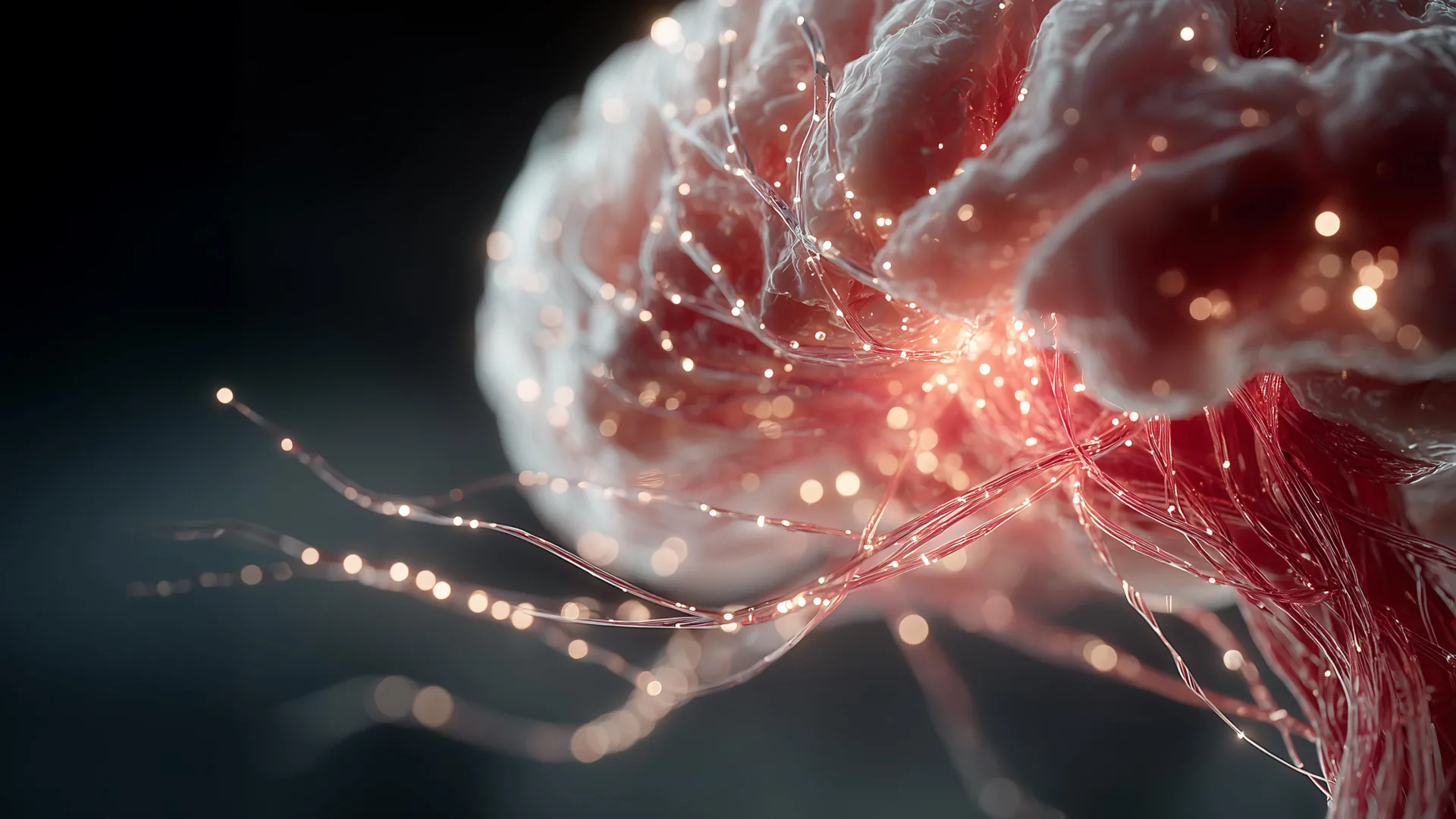
Researchers have grown pea-sized brains in the lab that are offering an unprecedented look at how neurons behave differently in schizophrenia and bipolar disorder. These psychiatric conditions affect millions of people worldwide, yet they remain difficult to diagnose because scientists have not fully understood their underlying molecular causes.
The findings could eventually help doctors reduce mistakes in diagnosing and treating mental health disorders. Today, many psychiatric conditions are identified through clinical judgment alone and treated using a trial-and-error approach to medication.
The research was published in the journal APL Bioengineering.
Why Schizophrenia and Bipolar Disorder Are Hard to Diagnose
"Schizophrenia and bipolar disorder are very hard to diagnose because no particular part of the brain goes off. No specific enzymes are going off like in Parkinson's, another neurological disease where doctors can diagnose and treat based on dopamine levels even though it still doesn't have a proper cure," said Annie Kathuria, a Johns Hopkins University biomedical engineer who led the study. "Our hope is that in the future we can not only confirm a patient is schizophrenic or bipolar from brain organoids, but that we can also start testing drugs on the organoids to find out what drug concentrations might help them get to a healthy state."
How Scientists Built and Studied Brain Organoids
To conduct the study, Kathuria's team created brain organoids, which are simplified versions of real human organs. They started by turning blood and skin cells from patients with schizophrenia, bipolar disorder, and from healthy individuals into stem cells capable of developing into brain-like tissue.
The team then used machine learning tools to analyze the electrical activity of cells inside these mini brains. In the human brain, neurons communicate by sending brief electrical signals to one another, and the researchers focused on identifying patterns in that activity linked to healthy and unhealthy brain function.
Electrical Biomarkers Identify Mental Illness
The scientists found that specific features of the organoids' electrical behavior acted as biomarkers for schizophrenia and bipolar disorder. Using these signals alone, they were able to correctly identify which organoids came from affected patients 83% of the time. When the tissue received gentle electrical stimulation designed to bring out more neural activity, accuracy increased to 92%.
The patterns they uncovered were complex and highly specific. Neurons from schizophrenia and bipolar disorder patients showed unusual firing spikes and timing changes across multiple electrical measurements, creating a distinct signature for each condition.
"At least molecularly, we can check what goes wrong when we are making these brains in a dish and distinguish between organoids from a healthy person, a schizophrenia patient, or a bipolar patient based on these electrophysiology signatures," Kathuria said. "We track the electrical signals produced by neurons during development, comparing them to organoids from patients without these mental health disorders."
Using Microchips to Map Brain Activity
To better understand how neurons formed networks, the researchers placed the organoids on microchips equipped with multi-electrode arrays arranged like a grid. This setup allowed them to collect data in a way similar to a tiny electroencephalogram, or EEG, the test doctors use to measure brain activity in patients.
When fully developed, the organoids reached about three millimeters in diameter. They contained multiple types of neural cells normally found in the brain's prefrontal cortex, a region involved in higher-level thinking. The mini brains also produced myelin, a substance that insulates nerve cells and helps electrical signals travel more efficiently.
Toward Personalized Psychiatric Treatments
The study included samples from just 12 patients, but Kathuria believes the results point toward meaningful clinical applications. The organoids could eventually serve as a testing platform for psychiatric medications before those drugs are prescribed to patients.
The team is now collaborating with neurosurgeons, psychiatrists, and neuroscientists at the John Hopkins School of Medicine. They are collecting additional blood samples from psychiatric patients to study how different drug concentrations affect organoid activity. Even with a limited number of samples, the researchers believe they may be able to suggest medication doses that help restore healthier neural patterns.
"That's how most doctors give patients these drugs, with a trial-and-error method that may take six or seven months to finds the right drug," Kathuria said. "Clozapine is the most common drug prescribed for schizophrenia, but about 40% of patients are resistant to it. With our organoids, maybe we won't have to do that trial-and-error period. Maybe we can give them the right drug sooner than that."
Story Source:
Materials provided by Johns Hopkins University. Original written by Roberto Molar Candanosa. Note: Content may be edited for style and length.
Journal Reference:
- Kai Cheng, Autumn Williams, Anannya Kshirsagar, Sai Kulkarni, Rakesh Karmacharya, Deok-Ho Kim, Sridevi V. Sarma, Annie Kathuria. Machine learning-enabled detection of electrophysiological signatures in iPSC-derived models of schizophrenia and bipolar disorder. APL Bioengineering, 2025; 9 (3) DOI: 10.1063/5.0250559
Cite This Page: