
Scientists discover a surprising twist in how the body burns calories
- Date:
- November 25, 2026
- Source:
- University of Basel
- Summary:
- Researchers have discovered that a drug can significantly increase the body's energy expenditure without clearly activating calorie-burning brown fat. The unexpected finding reveals a new challenge in developing obesity treatments that harness the body's natural fat-burning machinery.
- Share:
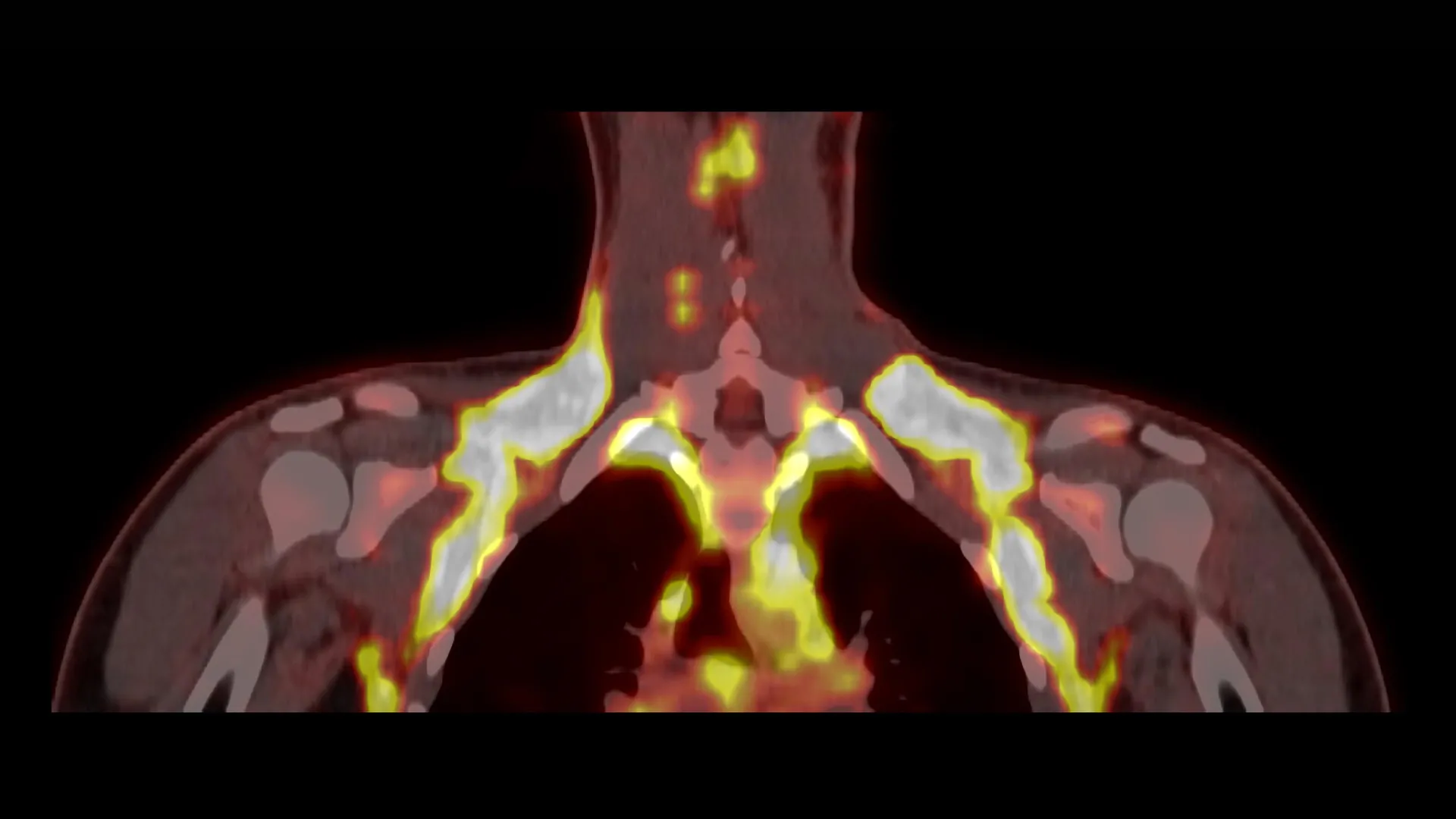
Unlike ordinary body fat, brown fat burns calories to generate heat, making it an attractive target for future obesity treatments. Researchers at the University of Basel and University Hospital Basel have now investigated whether medication can switch on this energy-burning tissue in humans. Their surprising findings suggest that harnessing brown fat with drugs may be more challenging than anticipated.
While white fat primarily serves as an energy reserve, brown adipose tissue uses energy to keep the body warm. People with more active brown fat also tend to be leaner and have better metabolic health.
Exposure to cold naturally activates brown fat, prompting scientists to search for medications that could mimic this response. A research team led by Professor Matthias Betz at the University of Basel and University Hospital Basel examined whether activating a specific receptor, known as the beta2 adrenergic receptor, could stimulate brown fat in humans. Their findings were published in the journal Cell Metabolism.
Drug Boosts Calorie Burning Without Clear Brown Fat Activation
To investigate, the researchers conducted two experiments involving 11 healthy volunteers. They compared the effects of mild cold exposure with those of fenoterol, a medication that stimulates beta2 adrenergic receptors. The scientists measured how much energy the participants expended and used PET/CT scans to monitor brown fat activity.
Both interventions caused the body to burn more energy. However, the scans revealed an important difference. Only cold exposure produced clear evidence of brown fat activation, with the tissue absorbing considerably more glucose than it did following fenoterol administration.
"We were surprised that energy expenditure increased strongly with fenoterol even though we could not detect a comparable activation of brown fat," says Betz. "Our study shows that an increase in energy expenditure does not automatically mean that brown fat has been activated."
Exactly where the additional energy is being consumed remains a mystery. The researchers suspect that fenoterol may increase energy consumption in other tissues, potentially including skeletal muscle or white fat.
Implications for Future Weight Loss Drugs
The findings also suggest that the biological mechanisms controlling brown fat in humans are more complex than previously thought. Analysis of human tissue indicates that fully activating brown fat may require the combined action of multiple receptors or biological signals rather than stimulating a single receptor.
Understanding these mechanisms could open new possibilities for treating obesity. Current weight loss medications work by reducing appetite. However, as people shed pounds, their bodies often compensate by burning fewer calories.
A treatment that simultaneously reduces appetite and increases calorie burning could help counteract this metabolic adaptation.
"Ideally, we could combine a reduction in appetite with an increase in energy expenditure," says Betz. "But first we need a better understanding of how brown adipose tissue is regulated."
Story Source:
Materials provided by University of Basel. Note: Content may be edited for style and length.
Journal Reference:
- Laila Maria Füchtbauer, Jaël Rut Senn, Carole Stéphanie Baumann, Anninja Lea Isenrich, Taylah Lea Gaynor, Rahel Schläfli, Anand Kumar Sharma, Carla Horvath, Claudia Irene Maushart, Adhideb Ghosh, Kirsi A. Virtanen, Tobias Fromme, Alin Chirindel, Damian Wild, Søren Nielsen, Christian Wolfrum, Matthias Johannes Betz. Beta2-adrenergic stimulation by fenoterol increases energy expenditure without activating human brown adipose tissue. Cell Metabolism, 2026; 38 (9): 1802 DOI: 10.1016/j.cmet.2026.07.012
Cite This Page: