
Scientists who discovered a third form of magnetism win major physics prize
Physicists have discovered a third form of magnetism hidden for over a century, potentially rewriting physics textbooks and transforming future technology.
- Date:
- October 18, 2026
- Source:
- Johannes Gutenberg Universitaet Mainz
- Summary:
- Physicists have uncovered a hidden third form of magnetism that challenges more than 100 years of established physics. Called altermagnetism, the discovery could transform future computing and electronics while opening an entirely new frontier in quantum research.
- Share:
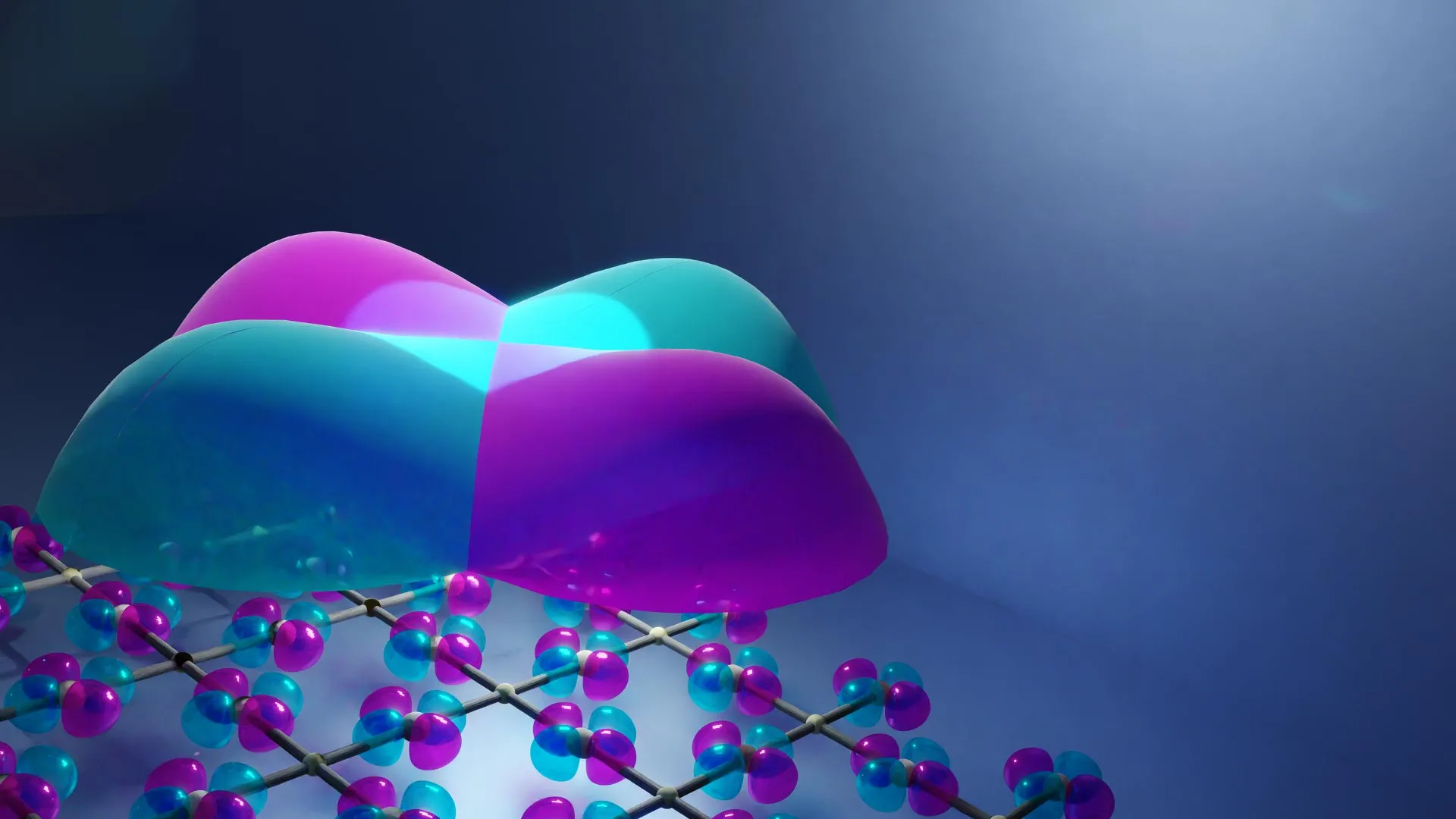
Scientists have uncovered a previously unknown form of magnetism, overturning an understanding of magnetic behavior that had stood for more than a century. The discovery, known as altermagnetism, has revealed a third fundamental category of collinear magnetism and opened new possibilities for quantum materials, advanced electronics, and future computing technologies.
Three physicists responsible for the breakthrough have been named recipients of the 2026 Europhysics Prize, one of Europe's most prestigious honors in condensed matter physics. The European Physical Society (EPS) Condensed Matter Division selected Professor Jairo Sinova of Johannes Gutenberg University Mainz (JGU), Dr. Libor Šmejkal, and Professor Tomas Jungwirth for their work establishing altermagnetism as a distinct form of magnetic order alongside ferromagnetism and antiferromagnetism.
"This award recognizes a fundamental discovery that challenged one of the most established paradigms in condensed matter physics," said Professor Jairo Sinova, Director of the Spin Phenomena Interdisciplinary Center (SPICE) at Mainz University. "Discovering that an entirely new magnetic phase had remained hidden for more than one hundred years demonstrates that even the most mature scientific fields can still hold fundamental surprises."
The breakthrough emerged from years of collaboration between Sinova's research group at Mainz University and Jungwirth's team at the Institute of Physics of the Czech Academy of Sciences in Prague. Šmejkal, who also maintained an affiliation in Prague, spent eight years at Mainz between 2016 and 2024, first pursuing doctoral research and later working as a postdoctoral scientist in Sinova's group.
During that period, Šmejkal played a leading role in developing the theoretical framework behind altermagnetism. By combining advanced mathematical approaches to symmetry with spintronics, which studies how electron spin can be used in electronic devices, the researchers identified a previously unrecognized pattern of magnetic behavior.
Their predictions soon attracted experimental teams around the world. Measurements of electronic properties and electrical transport in multiple materials provided evidence supporting the new magnetic classification. Altermagnetism has since grown into one of the most active areas of condensed matter physics, with research efforts expanding across Europe, North America, and Asia.
A Third Form of Magnetism Rewrites Physics
For more than 100 years, physicists generally divided collinear magnets into two fundamental categories: ferromagnets and antiferromagnets.
Ferromagnets have an overall magnetic alignment that produces a net magnetization. These materials are essential to many magnetic memory technologies used today. In conventional antiferromagnets, opposing magnetic moments cancel one another, leaving no overall magnetization and producing electronic behavior very different from that of ferromagnets.
Altermagnetism introduces a surprising third possibility.
Like antiferromagnets, altermagnets have magnetic moments that cancel out, resulting in no net magnetization. However, their electrons can exhibit properties previously associated with ferromagnets.
This unusual combination allows altermagnets to support electrical currents with strongly polarized electron spins while also displaying extremely rapid magnetic dynamics. Those characteristics could make them valuable for a new generation of spintronic devices, potentially advancing the speed and capabilities of future information technologies.
The significance extends well beyond electronics. Altermagnetism represents a previously unrecognized symmetry class of matter and has revealed unexpected connections to several major areas of modern physics, including topological phenomena, unconventional superconductivity, and quantum materials with strong interactions between electrons.
How Scientists Discovered Altermagnetism
The path toward this discovery began with theoretical investigations into unusual ways that electricity moves through magnetic materials. Among the early advances was the prediction of the crystal anomalous Hall effect, a phenomenon involving electrical transport in certain crystal structures.
Initially, these unexpected behaviors might have appeared to be unusual features of individual materials. However, the researchers eventually recognized that they were connected by a broader principle involving symmetries of electron spins.
Rather than representing isolated exceptions to established magnetic behavior, these materials belonged to an entirely different magnetic category.
A major milestone came in 2022, when the team published a comprehensive symmetry classification of altermagnetism and identified hundreds of materials that could potentially exhibit it.
Experimental physicists subsequently tested these predictions using several complementary methods. These included angle-resolved photoemission spectroscopy (ARPES), which reveals how electrons behave inside materials, along with measurements of electrical transport.
The results confirmed altermagnetic behavior in several materials, helping establish the new classification experimentally.
Interest in the discovery has expanded rapidly. Hundreds of scientific papers have appeared within just a few years, and altermagnetism has become a prominent subject at international physics conferences. The growing research community is now investigating both its fundamental properties and its potential technological applications.
Discovery Earns Prestigious 2026 Europhysics Prize
The Europhysics Prize recognizes major advances in condensed matter physics, a field concerned with the physical properties and behavior of materials. Established in 1975, the award honors discoveries that have significantly advanced scientific understanding, with a substantial share of the recognized research conducted in Europe.
The 2026 prize recognizes the theoretical and experimental advances that established altermagnetism as a new fundamental form of collinear magnetic order.
The award ceremony was scheduled for September 2026 at the 32nd General Conference of the European Physical Society Condensed Matter Division (CMD32) in Graz, Austria.
The Scientists Behind the Breakthrough
Professor Jairo Sinova is a physics professor at Johannes Gutenberg University Mainz in Germany and director of the university's Spin Phenomena Interdisciplinary Center. His research investigates magnetism, spintronics, and quantum materials.
Dr. Libor Šmejkal conducted much of the crucial theoretical work that led to the identification of altermagnetism while working at Mainz University from 2016 to 2024. His current affiliations include the Max Planck Institute for the Physics of Complex Systems, the Max Planck Institute for Chemical Physics of Solids, and the Institute of Physics of the Czech Academy of Sciences.
Professor Tomas Jungwirth is affiliated with the Institute of Physics of the Czech Academy of Sciences and the University of Nottingham. He has collaborated extensively with Sinova's Mainz research team and played a central role in establishing the theoretical foundations of altermagnetism.
Together, their work has revealed a fundamental property of magnetic matter that escaped recognition for more than a century, opening an entirely new direction for research into quantum physics and future electronic technologies.
Story Source:
Materials provided by Johannes Gutenberg Universitaet Mainz. Note: Content may be edited for style and length.
Cite This Page: