
Bats may have first evolved in Europe 65 million years ago
A massive new study traces bats back to ancient Europe and suggests flight and echolocation helped launch their extraordinary evolutionary success.
- Date:
- September 30, 2026
- Source:
- University College Dublin
- Summary:
- A huge genomic and fossil study suggests bats first evolved in Europe around 65 to 60 million years ago before spreading across the globe. The findings also indicate that flight and echolocation emerged near the beginning of bat evolution, potentially helping explain how bats became one of the most successful mammal groups on Earth.
- Share:
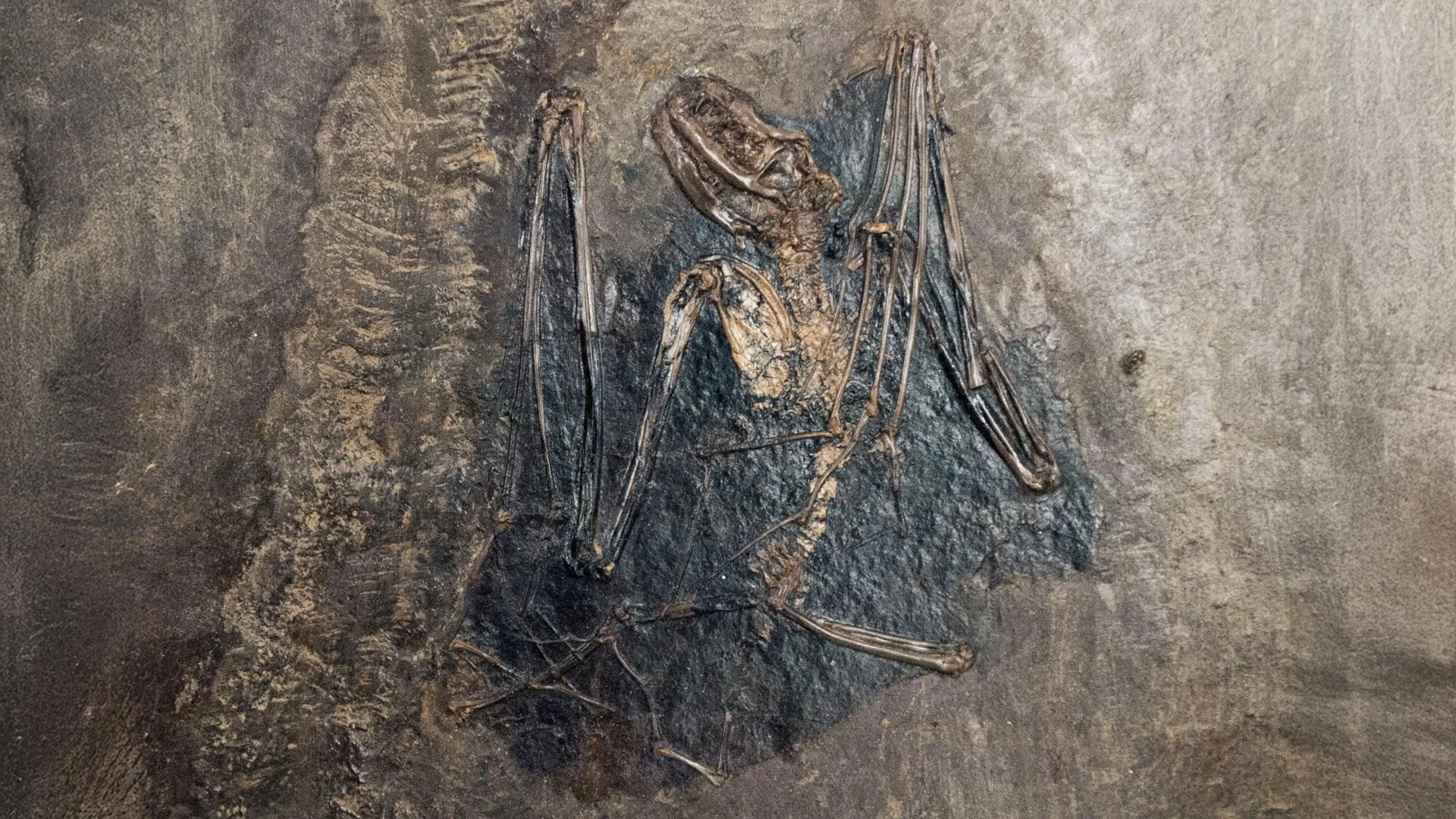
New research is reshaping scientists' understanding of bat evolution, with evidence suggesting that bats most likely originated in Europe during the late Paleocene, roughly 65 to 60 million years ago.
For decades, researchers have debated where bats first appeared. Africa, Asia, and North America have all been proposed as possible birthplaces.
Now, an international team of 137 researchers from 64 countries has combined genomic data from every living bat family with evidence from ancient fossils to reconstruct the evolutionary history of the world's only mammals capable of true powered flight. The work was carried out through the Bat1K consortium, a global effort dedicated to sequencing the genomes of all living bat species and co-founded by UCD Professor Emma Teeling.
A New Bat Family Tree
The study, published in Nature, examined 103 bat genomes, including 42 newly generated chromosome-level assemblies, covering all 21 recognized bat families. Researchers also incorporated evidence from 44 fossil bats.
Together, those data gave scientists a much clearer picture of how bats emerged and spread around the planet.
The results suggest that bats first evolved in Europe during the late Paleocene. Their descendants then moved into Africa.
As bats continued to diversify, separate groups expanded into the Americas, Asia, and Australia. Over time, those migrations produced the major bat lineages found around the world today.
Why Bats Are So Unusual
Bats are among the most distinctive mammals on Earth. They are the only mammals capable of sustained powered flight, and most species can navigate and hunt in darkness using sound.
They also represent about one fifth of all living mammals and play important ecological roles around the world.
Many bat species are unusually resistant to disease and can live far longer than other mammals of similar size. Even so, scientists have spent decades trying to resolve basic questions about how bats evolved and how their most unusual traits developed.
"It is extraordinary, after decades of research and conflicting findings, we finally have a robust phylogenetic tree that we can now use to properly understand how and where bats' unique traits evolved," said leading senior author and co-founding Director of Bat1K Professor Emma Teeling, UCD School of Biology and Environmental Science.
"We also have the genomes to uncover the molecular basis of these spectacular mammalian adaptations and know where the fossil bats fall in this tree."
Assistant Professors Graham Hughes and Zixia Huang, both from UCD School of Biology and Environmental Science, also contributed to the project through the international Bat1K consortium.
Flight and Echolocation Appeared Early
The findings also provide new clues about the origins of two of bats' defining features: powered flight and echolocation.
"As bats are the only mammals known to have evolved true powered flight, our findings point to Europe as the most likely place where mammalian powered flight first evolved," added Professor Teeling.
Researchers also analyzed the fossil bat Vielasia, which sits on the oldest branch of the bat family tree. That fossil suggests echolocation had already appeared close to the beginning of bat evolution.
Taken together, the evidence indicates that both powered flight and echolocation emerged before modern bat groups began diversifying. Those abilities may have helped give bats their remarkable evolutionary success.
"The approach we used to model the evolution of fossil and living species together can do what other methods cannot -- identify the oldest group of fossil bats while taking the genomic data into account, and uncover when and where bats originated," said senior author Professor Liliana M. Dávalos, Stony Brook University.
Reconstructing an Ancient Bat Genome
Researchers also computationally reconstructed the genome of the ancient ancestor shared by all living bats.
That reconstruction offers a glimpse into the genetic makeup of one of the earliest flying mammals and creates a new resource for studying how bats developed their exceptional diversity.
Scientists can now use the dataset to investigate the genetic changes associated with flight, echolocation, longevity, and disease resistance. It may also help researchers understand why many bats are unusually resistant to disease and exceptionally long lived for their size.
"We combined state-of-the-art DNA sequencing and computational methods to generate and compare these genomes and identify the genes they contain," said senior author Professor Michael Hiller, Senckenberg Research Institute, Frankfurt.
The genomic resource could eventually contribute to human research involving ageing, immunity, and disease resistance.
"Bats constantly surprise us. They are one of evolution's greatest experiments," said senior author Professor Sonja Vernes, University of St Andrews, and Bat1K co-founding Director.
"This extraordinary genomic resource, the culmination of years of international cooperation of Bat1K, is finally allowing us to understand how their remarkable biology evolved."
"This resource for the community of scientists allows them to investigate the different types of genomic variation, from single base changes to hundreds or thousands of bases missing from one lineage but present in another, that have given rise to the huge variety of bats that we share the planet with, and the origins of their unique characteristics," added senior author Professor David Ray, Texas Tech University.
Decades of Samples From Around the World
The project is the largest study yet to combine bat genomes and fossils. It draws on samples gathered over decades from bats worldwide, including rare species found only in remote regions.
In addition to identifying a likely geographic origin for bats, the analysis also resolves several long-running disagreements about how different bat families are related. Some of the results reveal unexpected evolutionary connections among unusual bat groups.
"This dataset represents decades of work by field researchers from around the world, collecting samples from some of the most remote places, from New Zealand to Madagascar," said Professor Teeling.
"None of this would have been possible without the dedication and collaboration of these researchers, working together through the Bat1K consortium to bring these samples together, allowing us to tell the evolutionary history of these extraordinary flying mammals."
The X Chromosome Helped Resolve a Long Debate
Reconstructing the bat family tree was particularly difficult because different parts of bat genomes can preserve conflicting signals about their evolutionary history.
One likely reason is that early bat lineages exchanged genes with one another. As a result, one section of the genome can suggest one set of evolutionary relationships while another points to a different pattern.
Researchers found, however, that part of the X chromosome preserved an especially clear record of the underlying relationships between bat groups.
That signal helped the team resolve evolutionary trees that had remained disputed for decades.
The study was supported in part by the European Research Council, Science Foundation Ireland and the Irish Research Council, alongside international partners.
Story Source:
Materials provided by University College Dublin. Note: Content may be edited for style and length.
Journal Reference:
- Ariadna E. Morales, Yan Liang, William R. Thomas, Evgeny V. Leushkin, Francisco X. Castellanos, Denis M. Larkin, Tom Brown, Bastian Fromm, Suzanne J. Hand, Zixia Huang, Graham M. Hughes, Matthew F. Jones, Burton K. Lim, Meike Mai, Eugene W. Myers, Martin Pippel, Sebastien J. Puechmaille, Nancy B. Simmons, Linelle Ann L. Abueg, Nadav Ahituv, Zahran A. AlAbdulsalam, Ine Alvarez van Tussenbroek, Dineilys V. Aparicio, Lina M. Arcila Hernández, Alexander Ben Hamadou, Petr Benda, Mark Blaxter, Alex V. Borisenko, Jorge Brocca, Nair Cabezón, Lucia Carbone, Jose I. Carvajal, Wharton O. Y. Chan, Paul Davis, Dina K. N. Dechmann, Annette Denzinger, Judith L. Eger, Seth J. Eiseb, David Enard, Mark D. Engstrom, Nicole M. Foley, Giulio Formenti, Jackson Fuller, Ismael Galván, Akshamal M. Gamage, Neil J. Gemmell, Joanne E. Gillum, Alejandro Gonzales-Irribarren, Mailyn A. Gonzalez, Steven M. Goodman, Jonathan Gray, Carola Greve, Michael W. Guernsey, Edgar G. Gutiérrez, Yelena Guttman, Michael Hackenberg, Elena Hilario, Leon Hilgers, Thomas W. Horsley, Melissa R. de Waal, Deirdre M. Jafferally, Erich D. Jarvis, Sahieda A. Joemratie, Mirjam Knörnschild, Jenna E. Kohles, Dimitrios-Georgios Kontopoulos, Bonhwang Koo, M. Elise Lauterbur, Michael Letko, Harris A. Lewin, Shenglin Liu, Darrell K. Lizamore, Brian D. Lloyd, Livia Loureiro, M. Cristina MacSwiney G, Yury V. Malovichko, Kirsty McCaffrey, Dominik W. Melville, Magdalena Meyer, William O. Mgoola, Matthieu Muffato, Vincent J. Munster, William J. Murphy, Martina Nagy, Nicolas Nesi, Kimberly A. Nevonen, Haris Nicolaou, Evans E. Nkrumah, Zacharias Norman, Brian P. O’Toole, Sarah H. Olson, Alain Ondzie, Bismark A. Opoku, Jorge Ortega, William S. Pearman, Francy J. Perez-Llanos, Kendra L. Phelps, Myrtani Pieri, Sarahjane Power, Maksym Prylutskyi, Paola Pulido-Santacruz, Guoying Qi, Bernal Rodríguez-Herrera, Danny Rojas, Indranee Roopsind, Stephen J. Rossiter, Constance Scharff, Tilman Schell, Stephanie N. Seifert, Fernando Simal, Pipat Soisook, Simone Sommer, Andrew Spalton, Emma L. Stone, Peter H. Sudmant, Sam Talbot, Robert M. Timm, Laura Uelze, Nathan S. Upham, Marek Uvizl, Peter Vallo, Juan M. Vazquez, Lin-Fa Wang, Linet C. Watson, Daniel Whitby, Sylke Winkler, York Winter, Laurel R. Yohe, Monika Zavodna, Ning Zhang, Huabin Zhao, David A. Ray, Sonja C. Vernes, Liliana M. Dávalos, Michael Hiller, Emma C. Teeling. Reference genomes and fossils revise bat family phylogeny and biogeography. Nature, 2026; DOI: 10.1038/s41586-026-11007-3
Cite This Page: