
Why multiple sclerosis slowly steals balance and movement
In multiple sclerosis, brain cells that control movement may be slowly “powering down,” fueling worsening balance and coordination problems.
- Date:
- January 6, 2026
- Source:
- University of California - Riverside
- Summary:
- Many people with multiple sclerosis struggle with balance and coordination, and this study uncovers a hidden reason why. Researchers found that inflammation in the brain disrupts the energy supply of vital movement-controlling neurons. As their mitochondria fail, these cells weaken and eventually die, worsening motor problems over time. Protecting brain energy systems could open the door to slowing these symptoms.
- Share:
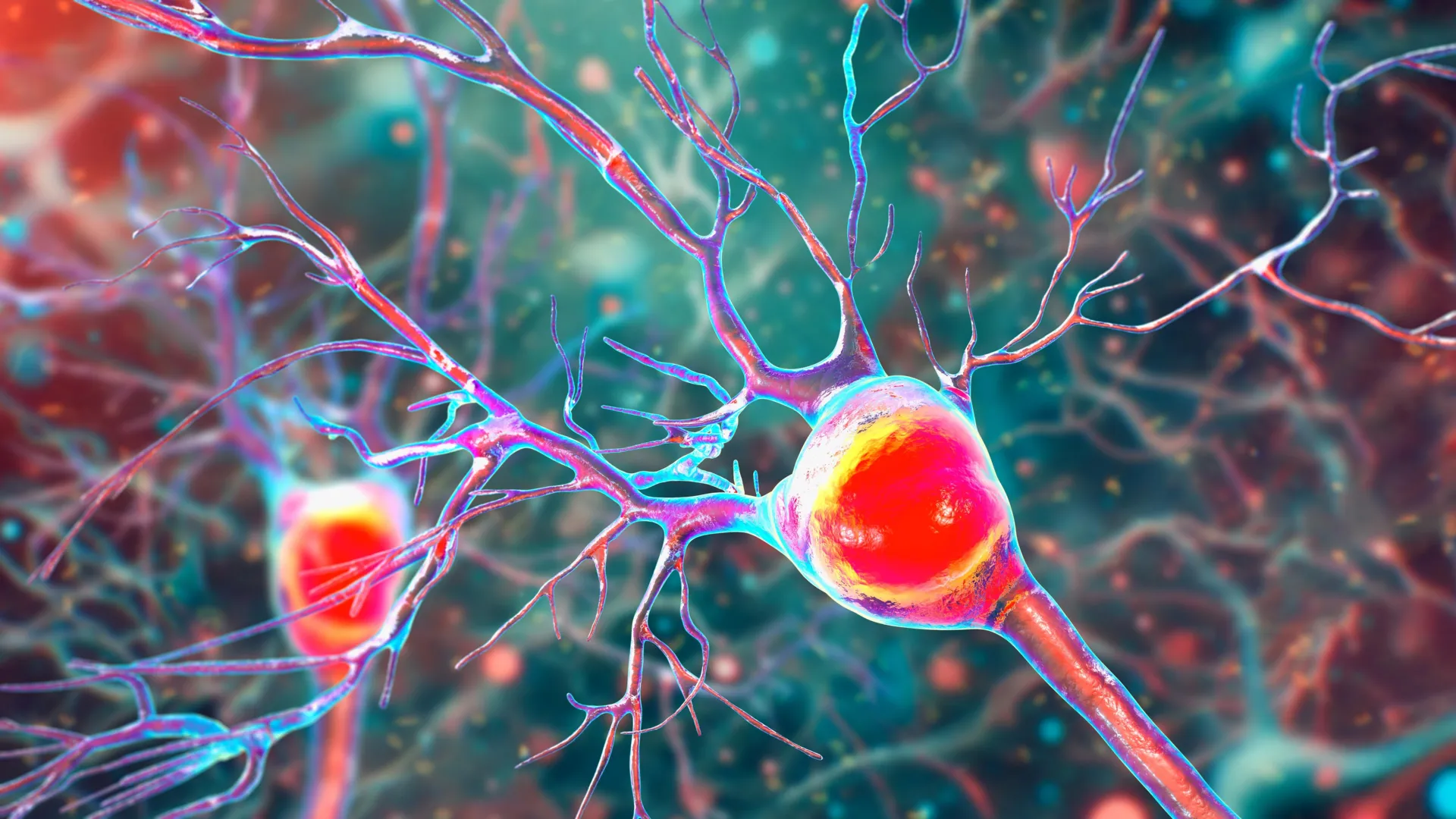
Multiple sclerosis (MS) affects about 2.3 million people worldwide. In roughly 80% of cases, the disease involves inflammation in the cerebellum, a region of the brain essential for balance and coordinated movement. Damage in this area can trigger tremors, unsteady motion, and difficulty controlling muscles. Over time, these symptoms often intensify as healthy tissue in the cerebellum is gradually lost.
New research from the University of California, Riverside offers fresh insight into why this decline occurs. The study, published in the Proceedings of the National Academy of Sciences, points to malfunctioning mitochondria as a major contributor to the progressive breakdown of cerebellar neurons known as Purkinje cells. The loss of these cells appears closely tied to worsening movement problems in people with MS.
Inflammation, Myelin Loss, and Energy Failure
MS is defined by ongoing inflammation and demyelination within the central nervous system. Demyelination is the process in which the myelin sheath -- a protective, insulating layer surrounding nerve fibers in the brain and spinal cord -- is damaged or destroyed. Without this insulation, electrical signals struggle to travel efficiently along nerves, leading to a wide range of neurological symptoms.
Mitochondria play a different but equally critical role. These structures supply most of a cell's energy, which is why they are often called the "powerhouses" of the cell.
"Our study, conducted by my graduate student Kelley Atkinson, proposes that inflammation and demyelination in the cerebellum disrupt mitochondrial function, contributing to nerve damage and Purkinje cell loss," said Seema Tiwari-Woodruff, a professor of biomedical sciences in the UC Riverside School of Medicine, who led the research team. "We observed a significant loss of the mitochondrial protein COXIV in demyelinated Purkinje cells, suggesting that mitochondrial impairment contributes directly to cell death and cerebellar damage."
Why Purkinje Cells Matter
Everyday movements such as walking, reaching, or maintaining balance rely on tight coordination between muscles, sensory organs, and multiple brain regions. The cerebellum plays a central role in this process.
"Inside the cerebellum are special cells called Purkinje neurons," Tiwari-Woodruff said. "These large, highly active cells help coordinate smooth, precise movements -- like dancing, throwing a ball, or even just walking. They're essential for balance and fine motor skills."
In MS and related neurological diseases, damage to the cerebellum often leads to the gradual death of Purkinje cells. As these neurons disappear, people may develop ataxia, a condition marked by poor coordination and unstable movement.
"Our research looked at brain tissue from MS patients and found major issues in these neurons: they had fewer branches, were losing myelin, and had mitochondrial problems -- meaning their energy supply was failing," Tiwari-Woodruff said. "Because Purkinje cells play such a central role in movement, their loss can cause serious mobility issues. Understanding why they're damaged in MS could help us find better treatments to protect movement and balance in people with the disease."
Evidence From an MS Mouse Model
To better understand how these changes unfold, the researchers also studied experimental autoimmune encephalomyelitis (EAE) -- a mouse model that develops MS-like symptoms. This allowed them to track mitochondrial changes as the disease progressed.
Over time, the mice experienced a steady decline in Purkinje cells, mirroring what is seen in human MS.
"The remaining neurons don't work as well because their mitochondria, the energy-producing parts, start to fail," Tiwari-Woodruff said. "We also saw that the myelin breaks down early in the disease. These problems -- less energy, loss of myelin, and damaged neurons -- start early, but the actual death of the brain cells tends to happen later, as the disease becomes more severe. The loss of energy in brain cells seems to be a key part of what causes damage in MS."
Although the EAE model does not replicate every feature of MS, its similarities to the human condition make it a powerful tool for studying neurodegeneration and testing new therapeutic approaches.
Targeting Mitochondria as a Treatment Strategy
"Our findings offer critical insights into the progression of cerebellar dysfunction in MS," Tiwari-Woodruff said. "Targeting mitochondrial health may represent a promising strategy to slow or prevent neurological decline and improve quality of life for people living with MS. This research brings us a step closer to understanding the complex mechanisms of MS and developing more effective, targeted treatments for this debilitating disease."
What Comes Next
The research team is now exploring whether mitochondrial damage extends beyond Purkinje cells to other cerebellar cell types, including oligodendrocytes, which help form white matter, and astrocytes, which support overall brain function.
"To answer this, one of our ongoing research projects is focused on studying mitochondria in specific types of brain cells in the cerebellum," Tiwari-Woodruff said. "Such research can open the door to finding ways to protect the brain early on -- like boosting energy in brain cells, helping them repair their protective myelin coating, or calming the immune system before too much damage is done. This is especially important for people with MS who struggle with balance and coordination, as these symptoms are tied to damage in the cerebellum."
The Importance of Continued Research
Tiwari-Woodruff stressed the broader importance of sustained investment in medical research.
"Cutting funding to science only slows progress when we need it most," she said. "Public support for research matters now more than ever."
The study was conducted by Tiwari-Woodruff and Atkinson alongside Shane Desfor, Micah Feria, Maria T. Sekyia, Marvellous Osunde, Sandhya Sriram, Saima Noori, Wendy Rincóna, and Britany Belloa.
Researchers analyzed postmortem cerebellar tissue from individuals with secondary progressive MS and compared it with tissue from healthy donors. The samples were obtained from the National Institutes of Health's NeuroBioBank and the Cleveland Clinic.
Funding for the study was provided by the National Multiple Sclerosis Society.
The research paper is titled "Decreased mitochondrial activity in the demyelinating cerebellum of progressive multiple sclerosis and chronic EAE contributes to Purkinje cell loss."
Story Source:
Materials provided by University of California - Riverside. Note: Content may be edited for style and length.
Journal Reference:
- Kelley C. Atkinson, Shane Desfor, Micah Feri, Maria T. Sekyi, Marvellous Osunde, Sandhya Sriram, Saima Noori, Wendy Rincón, Britany Bello, Seema K. Tiwari-Woodruff. Decreased mitochondrial activity in the demyelinating cerebellum of progressive multiple sclerosis and chronic EAE contributes to Purkinje cell loss. Proceedings of the National Academy of Sciences, 2025; 122 (25) DOI: 10.1073/pnas.2421806122
Cite This Page: