
A new treasure map reveals where Earth's lost prehistoric life may be hiding
- Date:
- November 12, 2026
- Source:
- Staatliche Naturwissenschaftliche Sammlungen Bayerns
- Summary:
- A sweeping analysis of 540 million years of marine fossils has revealed surprising gaps in our understanding of Earth's ancient life. Scientists discovered that some of the greatest opportunities for finding previously unknown species lie in relatively recent geological periods, rather than the distant past. By mapping unexplored fossil-rich regions around the world, researchers have created a powerful tool to guide future excavations.
- Share:
Fossils provide an extraordinary window into Earth's distant past, revealing the animals, plants, and ecosystems that existed millions of years ago. Yet the fossil record tells only part of the story. Fossilization is exceptionally rare, meaning that just a tiny fraction of the organisms that once lived on Earth have been preserved. Even when fossils survive, scientists can only discover them if the rock layers containing them are accessible today.
As a result, our picture of prehistoric life is filled with major gaps. Some geological periods and parts of the world have produced abundant fossils, giving scientists a detailed understanding of the life that existed there. Other periods and regions remain largely unexplored. Because fossil excavations require considerable time and resources, knowing where to search could make a major difference in uncovering new evidence of ancient life.
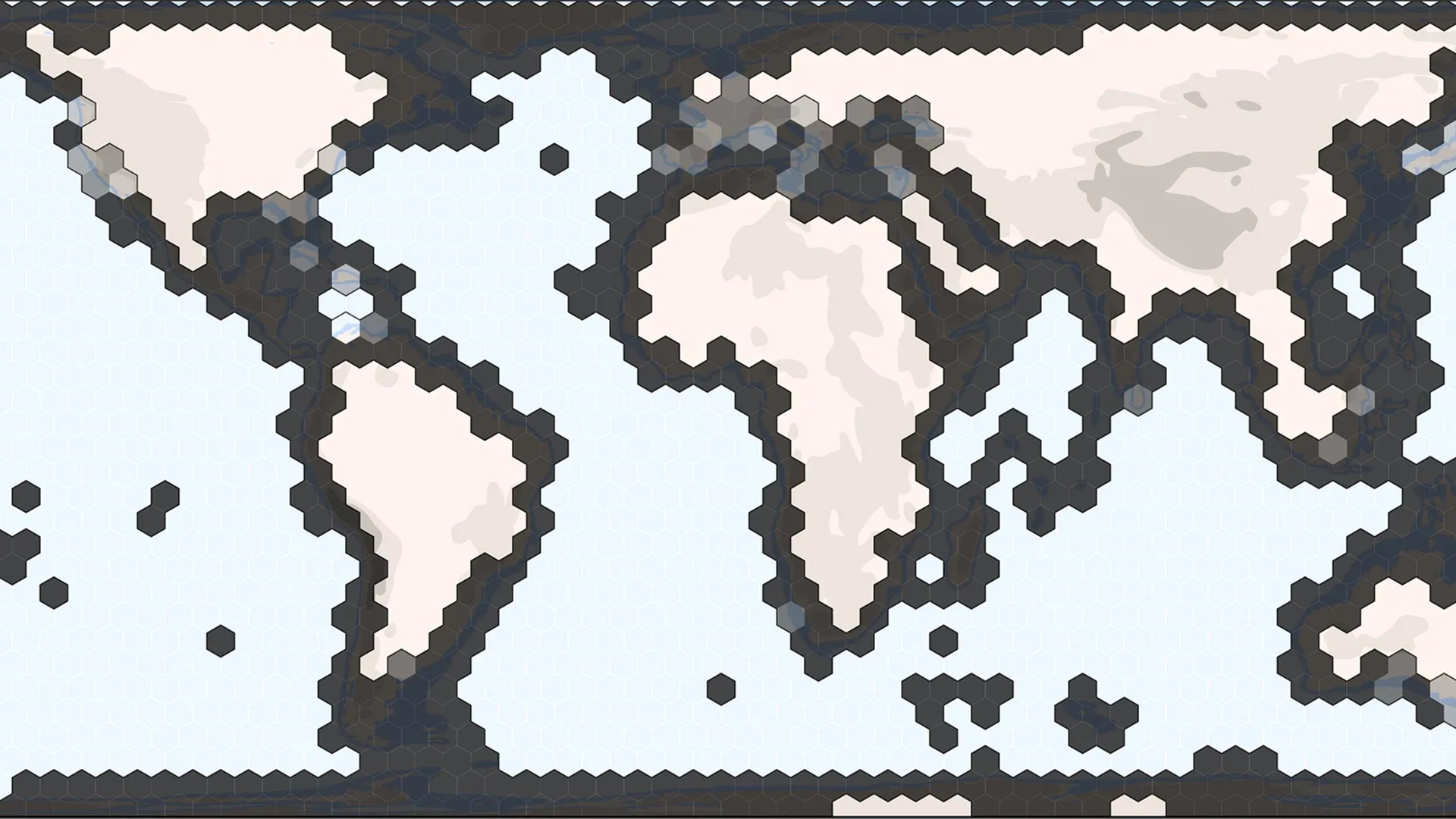
To help solve this problem, Thomas A. Neubauer of the Bavarian State Collections of Natural History (SNSB) and Mathias Harzhauser of the Natural History Museum in Vienna have developed a new tool for guiding fossil research. The two paleontologists analyzed the geographic distribution of fossil discoveries from animals that inhabited shallow marine environments over the past 540 million years. For the first time, they also mapped the regions of the world where fossil information is missing, providing a clearer picture of where future discoveries may be possible.
Mapping 540 Million Years of Ancient Marine Life
To build their map, the researchers examined records from the Paleobiology Database (PBDB), the world's leading freely accessible repository of fossil information. The database contains a substantial portion of the paleontological findings published by scientists around the world.
Using these records, the team reconstructed where fossils from ancient shallow marine environments have been documented throughout Earth's history. They also examined how fossil research has developed over decades and centuries, measuring how frequently investigations in different regions have produced new scientific information.
The researchers then compared these findings with geological information from the Macrostat database. This allowed them to assess not only where fossils have already been discovered, but also where suitable rock formations could provide opportunities to fill important gaps in the fossil record.
Where Earth's Missing Fossils May Be Hiding
The analysis revealed a surprising imbalance in our understanding of prehistoric life. The Early Mesozoic (approx. 252 to 66 million years ago) and the Palaeozoic (approx. 539 to 252 million years ago) have already been studied extensively. According to the researchers, additional fossil discoveries from these periods are unlikely to produce a substantial increase in scientific knowledge in the near future.
The greatest opportunities for expanding the fossil record may instead lie in more recent geological history. Although scientists have already collected extensive evidence from the Cenozoic Era (beginning 66 million years ago), the analysis suggests that its shallow marine deposits still contain significant untapped potential for fossil discoveries.
To help researchers investigate this period, the team identified locations around the world where previously unknown fossil species are especially likely to be found. Crucially, these are also places where the appropriate geological layers are exposed or otherwise accessible, making actual discoveries possible.
A Treasure Map for Future Fossil Discoveries
By highlighting regions where important evidence may still be waiting, the new approach could help paleontologists plan more productive expeditions and make better use of limited research resources. Rather than concentrating on areas that have already been explored extensively, scientists can focus on locations with the greatest potential to reveal something new about Earth's prehistoric ecosystems.
"The fact that many regions of the Earth remain unexplored offers hope for valuable new discoveries," says SNSB paleobiologist Neubauer.
"But precisely because expanding the fossil record is quite challenging and progresses only slowly, our work can help researchers worldwide to focus their research specifically on these still largely unexplored areas. We provide a valuable guide for planning future projects and excavation campaigns. The same applies to the examination of existing museum collections awaiting scientific analysis. Through sensible prioritization, we can fill gaps in the fossil record strategically."
Story Source:
Materials provided by Staatliche Naturwissenschaftliche Sammlungen Bayerns. Note: Content may be edited for style and length.
Journal Reference:
- Thomas A. Neubauer, Mathias Harzhauser. Staking out the frontiers: The limits of the metazoan shallow marine fossil record. Science Advances, 2026; 12 (39) DOI: 10.1126/sciadv.aeh3920
Cite This Page: