
Scientists discover how harmful “zombie cells” hide from the immune system
Cedars-Sinai identified a protein that may allow harmful “zombie cells” to evade the immune system and accumulate as we age.
- Date:
- October 14, 2026
- Source:
- Cedars-Sinai Medical Center
- Summary:
- Scientists have discovered a protein that may help harmful aging cells hide from the immune system, allowing them to accumulate and fuel age-related health problems. Blocking the protein in mice reduced these cells and inflammation while improving blood sugar regulation and strength, offering a promising new direction for anti-aging research.
- Share:
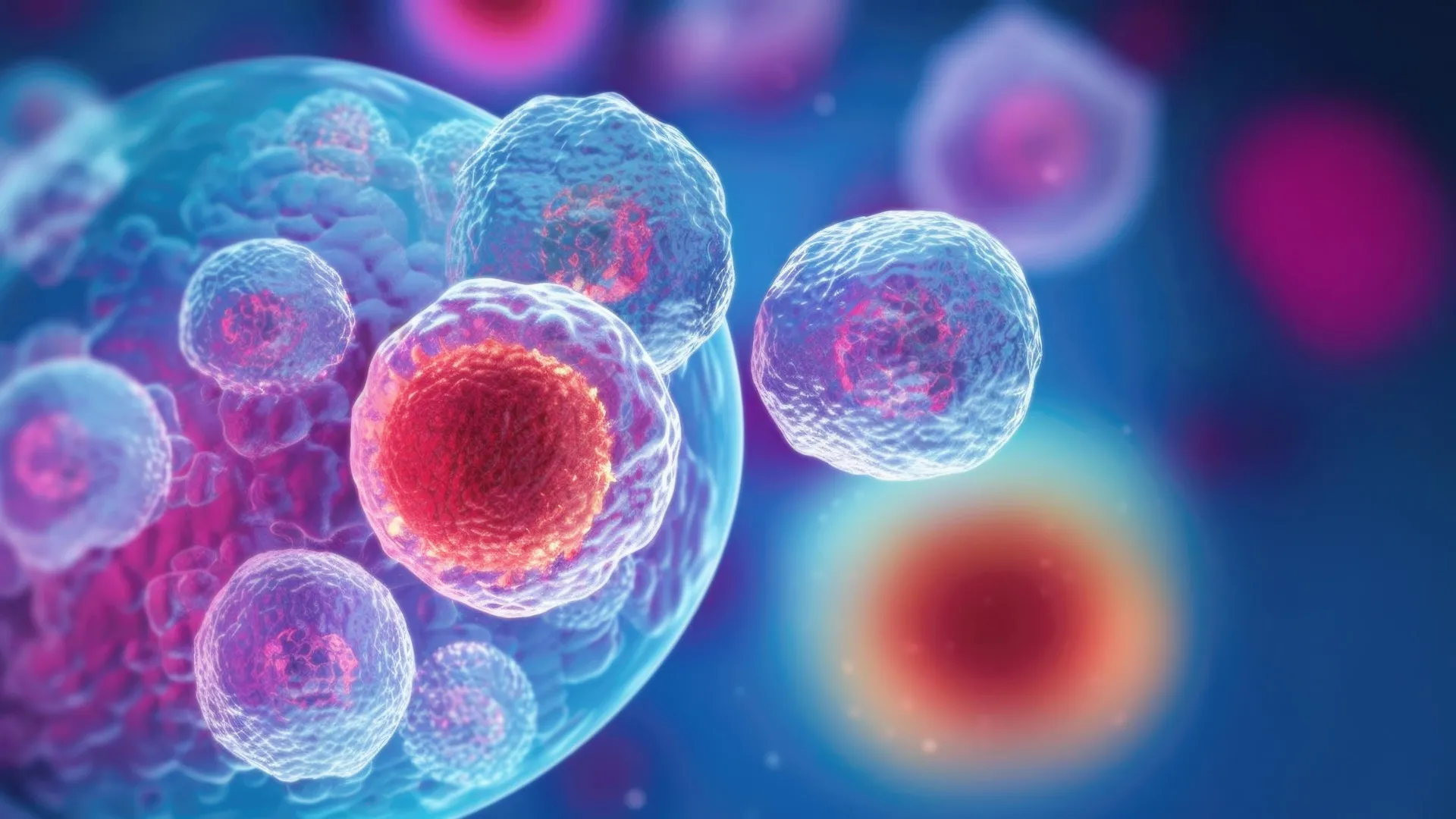
Researchers led by Cedars-Sinai Health Sciences University have discovered a protein that may allow harmful aging cells to escape detection by the immune system. By helping these cells remain in the body instead of being cleared away, the protein could contribute to their accumulation and the development of health problems associated with aging.
The discovery, published in Cell Metabolism, identifies PD-L2 as a potential target for therapies aimed at eliminating harmful aging cells. Scientists also believe the protein could serve as a blood marker, providing a way to detect and monitor these cells.
"Our findings suggest that PD-L2 may help aging cells stay in the body when they would normally be removed by the immune system," said Selim Chaib, PhD, research assistant professor of Medicine at Cedars-Sinai and first and co-corresponding author of the study.
How Harmful Aging Cells Escape the Immune System
As cells age or become damaged, some enter a state known as senescence. These cells stop dividing but remain alive, lingering in tissues rather than disappearing. Over time, they can accumulate and release substances that trigger inflammation and disrupt the normal activity of surrounding cells.
The buildup of these senescent cells has been associated with a range of health problems that become more common with age. Understanding why they persist, particularly when the immune system would normally remove them, could help scientists develop new ways to reduce their harmful effects.
The researchers found that PD-L2 may play an important role in this process by helping aging cells avoid immune clearance.
Blocking PD-L2 Reduces Aging Cells in Mice
To investigate the protein's role, scientists conducted experiments in laboratory mice in which PD-L2 was either removed or blocked. Both approaches reduced the accumulation of senescent cells and lowered levels of the inflammatory substances they release.
The benefits extended beyond changes at the cellular level. Mice with reduced PD-L2 activity also showed improvements in their ability to process sugar and demonstrated greater grip strength, suggesting that targeting the protein could influence physical functions affected by aging.
The team also examined human cells and tissues. They discovered that senescent human cells produced more PD-L2 than younger cells and that levels of the protein rose with age in certain human tissues. These findings suggest the mechanism observed in mice may also be relevant to human aging.
A Potential New Target for Age-Related Diseases
The results raise the possibility that blocking PD-L2 could help the immune system recognize and eliminate harmful aging cells, potentially reducing some of the health problems associated with their buildup.
"If we can find a way to block this protein, we may be able to help the immune system get rid of these cells and potentially improve health problems linked with aging," said James Kirkland, MD, PhD, director of the Center for Advanced Gerotherapeutics and senior author of the study.
Although the findings are promising, more research is needed before the approach can be considered for treating people. Future studies will investigate whether blocking PD-L2 is safe and can deliver meaningful health benefits in humans. Researchers also hope to clarify how the protein contributes to diseases associated with aging.
Additional Cedars-Sinai researchers who contributed to the study include Larissa Langhi Prata, Masayoshi Suda, Andres Sola, Jia Nie, Hyungsoo Kim, Tamar Pirtskhalava, Nino Giorgadze, Nicolas Musi, Ze'ev Ronai, and Tamara Tchkonia.
Other contributing authors were Thomas Mitchell, Zacharias Anastasiadis, Hawley Kunz, Stella Victorelli, Ricardo Lozano Flores, Moritz Weigl, Shimpei Kawamoto, Ken Uemura, Binsheng Wang, Christina Inman, Ailing Xue, Kurt Johnson, Jair Espindola-Netto, Sonja Suvakov, Jennet Hatamova, Erik Parker, Davyn Benitto Hartono, Vagisha Kulshreshtha, Jose Alberto Lopez-Dominguez, Aaron Deisinger, Allyson Palmer, Yi Zhu, Megan Weivoda, Anne Gingery, Robert Hromas, Vesna Garovic, João Passos, David Allison, Eiji Hara, Michael Jensen, Stefan Tullius, Manuel Serrano, Ming Xu, Ian Lanza, and Yuji Ikeno.
Funding: Work in the J.L.K. laboratory was supported by the US National Institutes of Health (NIH; grants R37AG013925, R33AG061456, and P01AG062413), the Connor Fund, Robert J. and Theresa W. Ryan, the Hevolution Foundation, and the Noaber Foundation. Y.I. was supported by the San Antonio Nathan Shock Center Pathology Core (NIH Grant P30AG13319), San Antonio Claude D. 445 Pepper Center (NIH P30 AG044271), and NIH grants R01AG070034 and R56AG057785. M.D.J.'s studies were supported by NIH grants DK-45343 and DK-40484. H.E.K. was supported by an NIH musculoskeletal research training grant (T32AR56950) and NIH grant K01DK134765. S.K. was supported by the Japan Science and Technology Agency (JST) JPMJFR2308 and Japan Society for the Promotion of Science (JSPS) JP23K06481. L.G.P.L.P was supported by NIH grant 1K01AG090692. The clinical trial (NCT03350906) was supported by grants UL1TR002377 from the National Center for Advancing Translational Sciences (NCATS) and NIH R01AG054454. Y.Z. was supported by the Hevolution Foundation. J.F.P. was supported by NIH grants R01AG068048, R01AG82708, and UG3CA268103 and the Glenn Foundation for Medical Research. S.V.G. is supported by a Robert and Arlene Kogod Center on Aging Career Development Award and a c-SiG Pilot and Feasibility Award. A.G. was supported by NIH grant R01AR076347. M.X. is supported by a Hevolution/AFAR New Investigator Award in Biology and Geroscience Research. This work was supported in part by NIH P30AG050886.
Disclosures: S.C. holds patents or pending patents on PD-L2 at Mayo Clinic and Spanish National Cancer Research Center, some of which have been licensed to Rejuveron Senescence Therapeutics. M.S. is a shareholder of Senolytic Therapeutics, Life Biosciences, Rejuveron Senescence Therapeutics, and Altos Labs. T.T., Y.Z., A.K.P., T.P., N.G., and J.L.K. have a financial interest related to this research, including patents and pending patents covering senolytic drugs and their uses that are held by Mayo Clinic.
Story Source:
Materials provided by Cedars-Sinai Medical Center. Note: Content may be edited for style and length.
Journal Reference:
- Selim Chaib, Larissa G.P. Langhi Prata, Masayoshi Suda, Andres Sola, Thomas J. Mitchell, Zacharias P. Anastasiadis, Hawley E. Kunz, Jia Nie, Stella G. Victorelli, Ricardo Lozano Flores, Moritz Weigl, Shimpei Kawamoto, Ken Uemura, Hyungsoo Kim, Binsheng Wang, Christina L. Inman, Tamar Pirtskhalava, Nino Giorgadze, Ailing Xue, Kurt O. Johnson, Jair M. Espindola-Netto, Sonja Suvakov, Jennet Hatamova, Erik S. Parker, Davyn Benitto Hartono, Vagisha Kulshreshtha, Jose Alberto Lopez-Dominguez, Aaron M. Deisinger, Allyson K. Palmer, Yi Zhu, Megan M. Weivoda, Anne Gingery, Robert Hromas, Vesna D. Garovic, João F. Passos, David B. Allison, Eiji Hara, Michael D. Jensen, Nicolas Musi, Stefan G. Tullius, Ze’ev A. Ronai, Manuel Serrano, Ming Xu, Ian R. Lanza, Yuji Ikeno, Tamara Tchkonia, James L. Kirkland. Blocking PD-L2 prevents senescent cell accumulation and age-related dysfunction. Cell Metabolism, 2026; DOI: 10.1016/j.cmet.2026.08.014
Cite This Page: