
Africa’s forests have flipped from carbon sink to carbon source
Africa’s forests are no longer helping fight climate change—they’re now making it worse by releasing more carbon than they absorb.
- Date:
- April 13, 2026
- Source:
- University of Leicester
- Summary:
- Africa’s forests have undergone a shocking reversal, switching from carbon absorbers to carbon emitters after 2010. Researchers found that heavy deforestation in tropical regions has led to massive biomass losses, far outweighing any gains from regrowth elsewhere. This change could seriously undermine global efforts to slow climate change. Scientists warn that protecting forests is now more urgent than ever.
- Share:
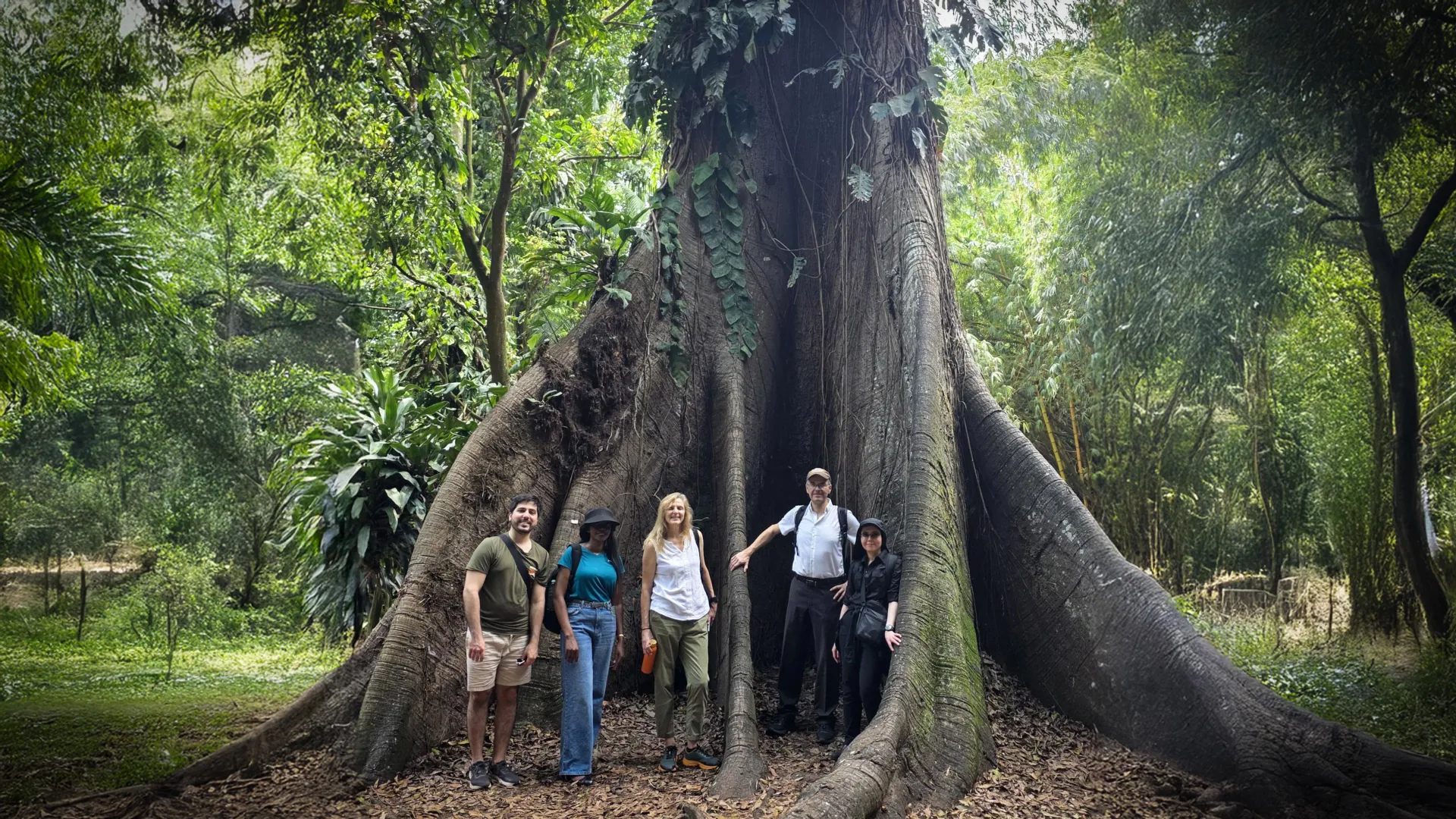
New research has delivered a stark warning about a major change in Africa's forests. Once a crucial part of the fight against climate change, these forests are now releasing more carbon than they absorb.
The findings come from an international study published in Scientific Reports, led by scientists from the National Centre for Earth Observation at the Universities of Leicester, Sheffield and Edinburgh. The research shows that forests across the continent, long known for pulling carbon dioxide out of the atmosphere, have reversed course and are now contributing to emissions.
This shift began after 2010 and highlights the growing urgency for stronger global efforts to protect forests. It also comes at a time when forest conservation was a key topic at the COP30 Climate Summit held last week in Brazil.
Satellite Data Reveals Decade of Forest Loss
To understand what changed, researchers used advanced satellite observations and machine learning to analyze more than ten years of forest data. They focused on aboveground forest biomass, which reflects how much carbon is stored in trees and other vegetation.
The results show a clear turning point. Between 2007 and 2010, Africa's forests were gaining carbon. After that, however, widespread deforestation and degradation in tropical rainforests pushed the system into decline.
From 2010 to 2017, Africa lost about 106 billion kilograms of forest biomass each year. That is roughly equal to the weight of 106 million cars. The biggest losses occurred in tropical moist broadleaf forests, especially in the Democratic Republic of Congo, Madagascar, and parts of West Africa. Although some savanna areas saw increases due to shrub growth, these gains were far too small to balance the losses.
A Wake Up Call for Global Climate Policy
Professor Heiko Balzter, senior author and Director of the Institute for Environmental Futures at the University of Leicester, emphasized the global implications. He said: "This is a critical wake-up call for global climate policy. If Africa's forests are no longer absorbing carbon, it means other regions and the world as a whole will need to cut greenhouse gas emissions even more deeply to stay within the 2°C goal of the Paris Agreement and avoid catastrophic climate change. Climate finance for the Tropical Forests Forever Facility must be scaled up quickly to put an end to global deforestation for good."
Advanced Mapping of Forest Carbon Changes
The study combines data from NASA's GEDI laser instrument and Japan's ALOS radar satellites with machine learning techniques and thousands of ground-based forest measurements. This approach allowed researchers to produce the most detailed map yet of biomass changes across Africa, capturing patterns of deforestation at a local level over a full decade.
The findings arrive alongside the launch of the Tropical Forests Forever Facility by the COP30 Presidency. This initiative aims to raise billions of Pounds to support climate finance, offering payments to countries that preserve their tropical forests.
However, the study makes clear that without immediate action to stop forest loss, the world could lose one of its most important natural systems for storing carbon.
Solutions to Reverse Forest Loss
Dr. Nezha Acil, a co-author from the National Centre for Earth Observation at the University of Leicester's Institute for Environmental Futures, pointed to steps that could help turn the trend around. She said: "Stronger forest governance, enforcement against illegal logging, and large-scale restoration programs such as AFR100, which aims to restore 100 million hectares of African landscapes by 2030, can make a huge difference in reversing the damage done."
Global Implications for Climate Goals
Dr. Pedro Rodríguez-Veiga, who led much of the analysis at NCEO and the University of Leicester and now works at Sylvera Ltd., highlighted the broader impact. He said: "This study provides critical risk data for Sylvera and the wider voluntary carbon market (VCM), and shows that deforestation isn't just a local or regional issue -- it's changing the global carbon balance. If Africa's forests turn into a lasting carbon source, global climate goals will become much harder to achieve. Governments, the private sector, and NGOs must collaborate to fund and support initiatives that protect and enhance our forests."
The project was supported by public funding from the UK Natural Environment Research Council (NERC), the European Space Agency (ESA), and a network of partner institutions across Europe and Africa.
Story Source:
Materials provided by University of Leicester. Note: Content may be edited for style and length.
Journal Reference:
- Pedro Rodríguez-Veiga, Joao M. B. Carreiras, Shaun Quegan, Janne Heiskanen, Petri Pellikka, Hari Adhikari, Arnan Araza, Martin Herold, Oliver Cartus, Thomas Luke Smallman, Mathew Williams, Chukwuebuka J. Nwobi, Narumasa Tsutsumida, Casey M. Ryan, Thom Brade, Nezha Acil, Heiko Balzter. Loss of tropical moist broadleaf forest has turned Africa’s forests from a carbon sink into a source. Scientific Reports, 2025; 15 (1) DOI: 10.1038/s41598-025-27462-3
Cite This Page: